Gardens, People and a Waterfront Gem
Turner Station is a hidden gem of Baltimore County with a history of pride and residents quick to promote its strengths. On March 9 th , NeighborSpace acquired a 0.58-acre piece of triangular land on the northern border of the neighborhood. Having had the pleasure of speaking with two longtime residents and activists in the community, I have the honor of sharing their strong memories and about the character of the community and the hope of the future.
You may not have heard of Turner Station before; but, you have certainly heard of Bethlehem Steel. Housing was developed for white workers at Bethlehem Steel; however, owing to the despicable realities of discrimination and segregation, housing excluded black workers. Barred from living in Dundalk and Middle River, African Americans created their own community, first as squatters “in the meadows,” which later developed into cabins, and then with row homes. According to Baltimore Heritage, Turner Station soon became one of the largest African-American communities in Baltimore County.
In my conversation with Edythe Brooks, Turner Station Conservation Teams’ (TSCT) Vice President, she shared some famous names which were home grown in Turner Station. They include Grammy-award- winning musicians, Emmy-award-winning performers, congressmen, astronauts, professional athletes, and a scientific legend essential in developing the polio vaccine, which, in turn, was used in scientific advancements such as cloning, gene mapping, and invitro fertilization. That’s just to name a few! Seriously, we are talking all of this greatness coming from an area of roughly one square mile!
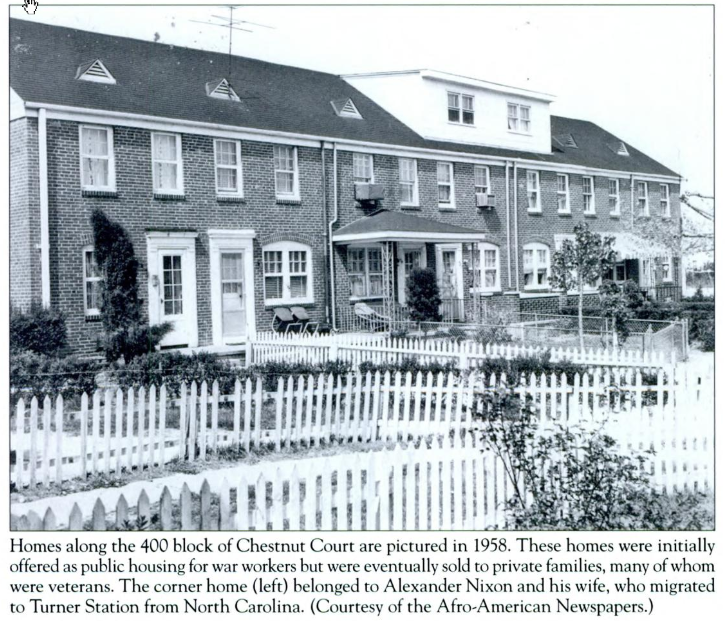
Excerpt from Jerome Watson, Turner Station Heritage Foundation
Gloria Nelson, TSCT President, shared that her father and other men in the area utilized the triangular space for community gardens. What I found interesting was that the original “meadows” was an area reserved for pigeon guano, an extremely potent fertilizer used for farming. It’s no wonder, then, that the community gardens were abundant in food. Ms. Nelson claimed “The soil was really rich, sometimes he (dad) couldn’t keep up with what was planted – one summer so much corn!” She explained that someone would come and plow the whole space in the spring and they (the community) would divide up the land for community gardening – with each family responsible for their own space:
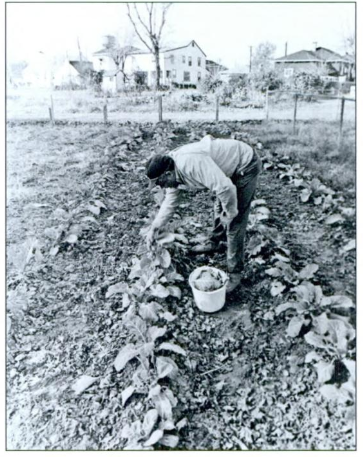
Depiction of property farms in Turner Station, photo courtesy of Baltimore News-American
The lot was important, it FED us. My dad grew everything. My mother loved to cook and she would freeze until the freezer was full and then she would can the rest. We would have fresh produce all year long. We had home grown food. We weren’t concerned about pesticides. Everything from string beans, tomatoes, kale, and corn and we would end the year with collard greens. And no one worried about night raiding of food, there was pride, there was care. And if we (kids) kicked a ball into the gardens, you were tip-toeing into the space not trying to break or bump a plant and getting out of their quickly.
Another memory Ms. Nelson shared was neighbors pulling picnic tables and grills out along the alley on Chestnut Street. They would set up behind their homes and create an extension off their property to the green space. Kids would play in the alley and on the sloped area. She remembers that when one person began to mow the green horseshoe area on Chestnut Court, within a short time, others would come out to complete it. Oddly enough it is County owned property, but the maintenance program didn’t have it on their list since the community had maintained it from its inception. These are just some of the memories of character and community that are Turner Station.
Today, the residents of Turner Station are focused on its revival. They look to maintain the history of this gem on the water by instilling pride in younger generations to return and rebuild. NeighborSpace looks to work with the community to develop a plan for this triangular 0.58-acre plot of land, located on the northern boundary of Turner Station and bordering Dundalk Ave and the alleys of Chestnut Street and Chestnut Court. The space was occupied by a garden up until a few years ago and maintained by longtime resident Mr. Shelton. NeighborSpace will help the community design a space they will use together and celebrate the heritage of Turner Station.
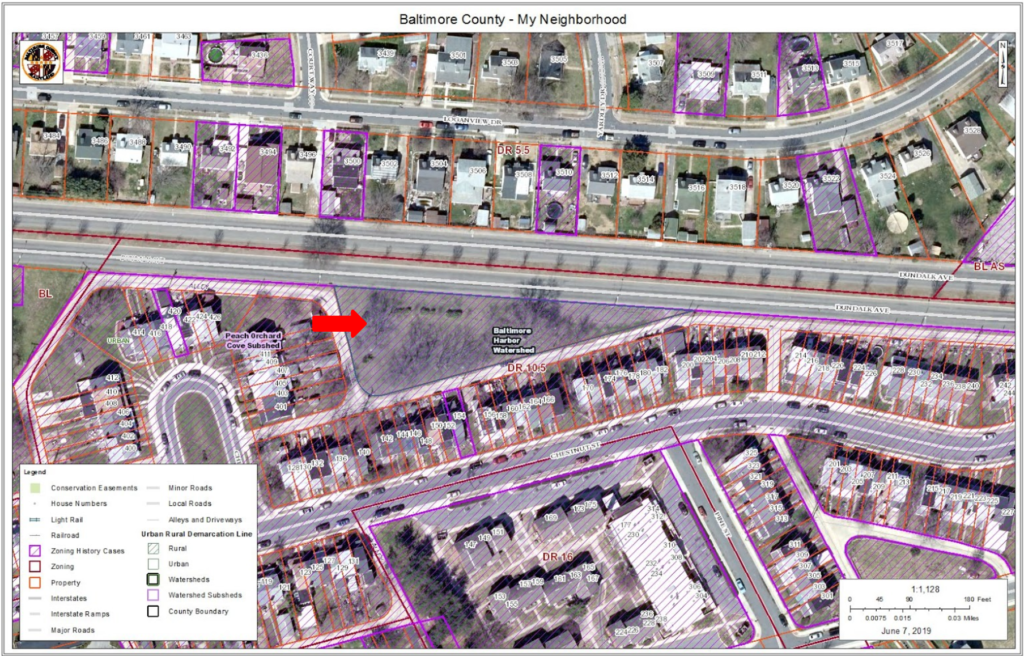
Red arrow pointing to area of property purchased
If you’d like to become a stewardship partner for this property or would like to participate in the community design meetings, please send an email to shannon@neighborspacebaltimorecounty.org. We will add you to our mailing list keeping you up-to-date on meetings and other information about the triangle in Turners Point.