9/29/2026 | Will Kaselow, Community Conservation Manager
Temperatures are dropping, leaves are falling, and things with wings are on their way south! This month, NeighborSpace has brought 23 participatory scientists out to our forests and parks for bird walks and bioblitzes. We have also hosted a native gardening and pollinator talk and bird monitoring workshop. Thank you to everyone who came out as well as the Baltimore Bird Club for partnering with us on the walks, Mike and Kelly Strzelecki for helping lead our Levickas Woods walk, and finally Baltimore County Public Library for hosting our talks and workshops.
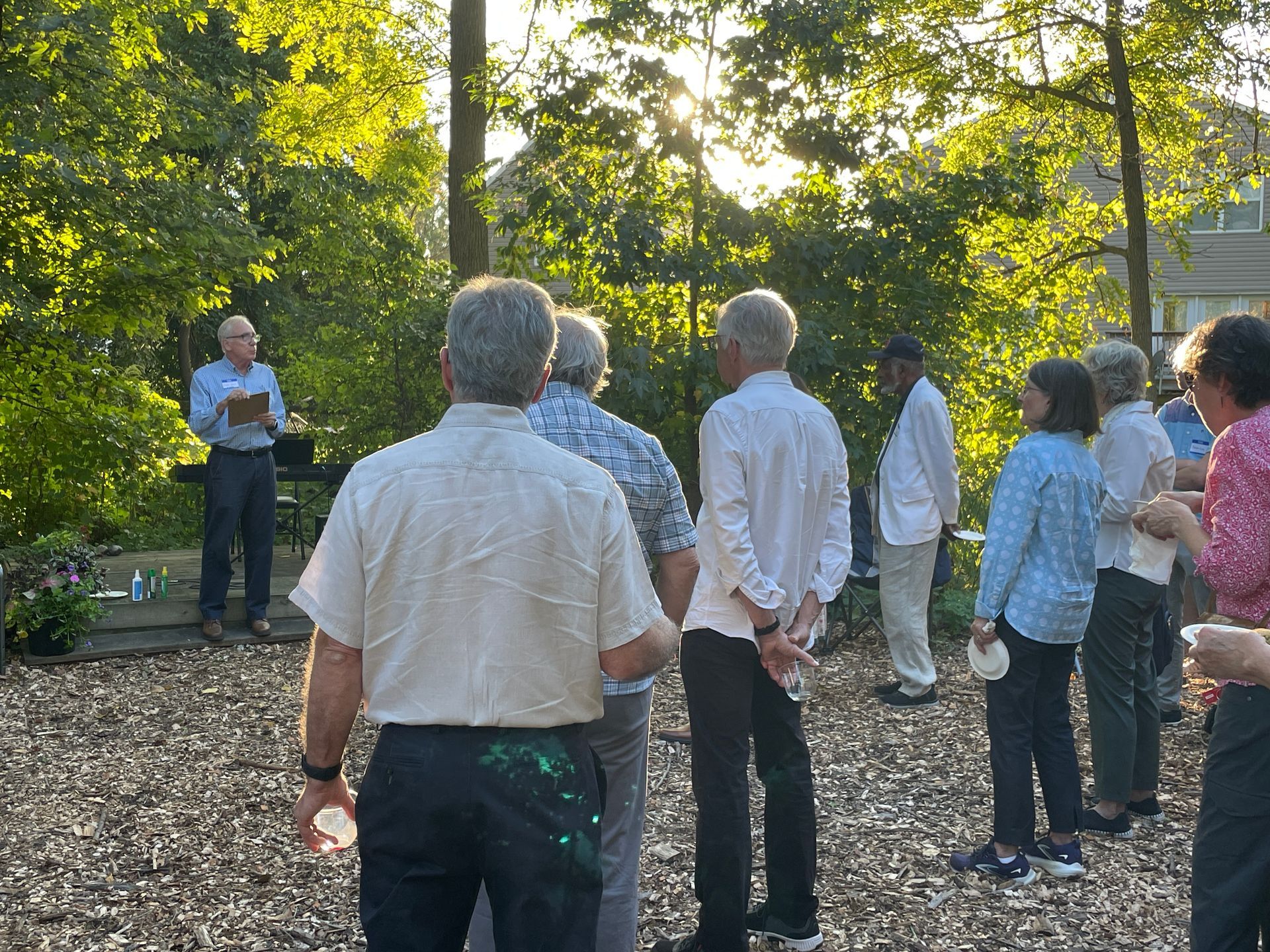
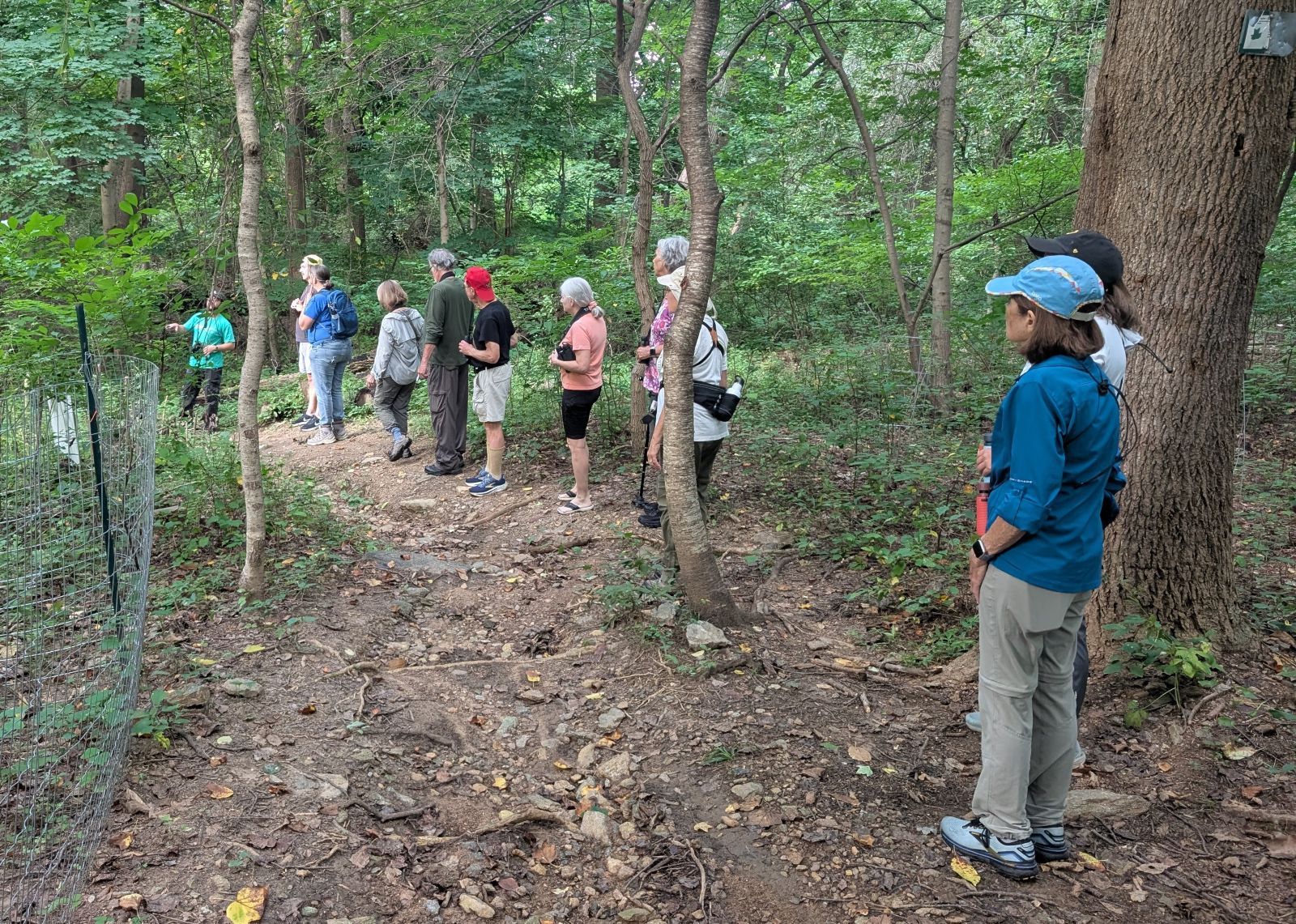
Bird walk participants on trail at Tollgate Wyndham Preserve
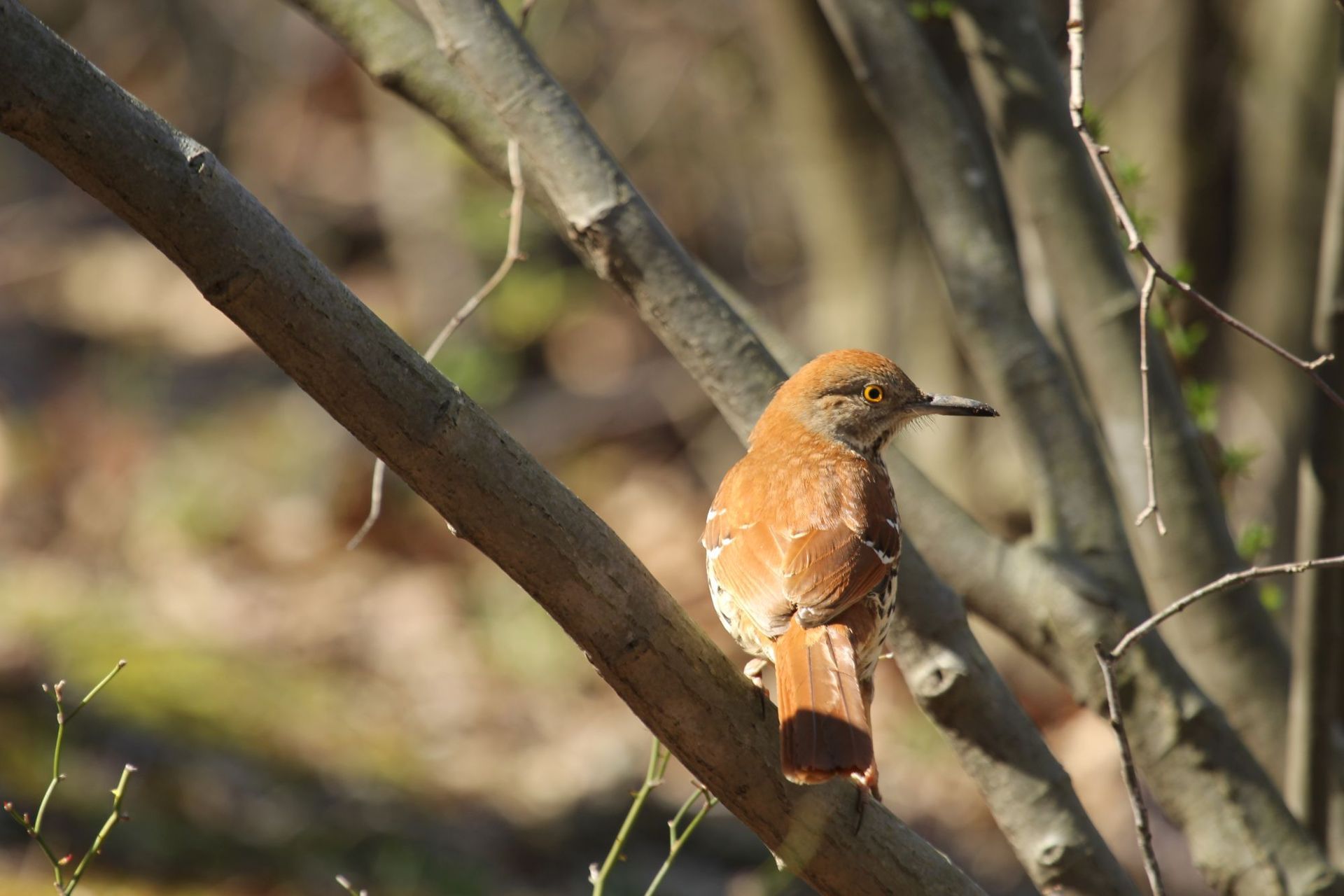
Our bird monitoring program reached a milestone this fall, as a volunteer bird monitor at Tollgate Wyndham Preserve reported the first Ruby-throated Hummingbird ever recorded at a NeighborSpace site. That little hummingbird represented the 100th species of bird recorded across NeighborSpace sites! She also reported three other species that had never been seen at Tollgate Wyndham, bringing that particular preserve’s total species up to 58. This is the power of many eyes, and part of why we are hoping to continue expanding our monitoring program.
Both of our bird walks this month had their challenges and rewards. At Tollgate Wyndham, our patience paid off when we heard the call of North America’s largest woodpecker, the Pileated Woodpecker. This crow-sized woodpecker with striking black, white, and red plumage flew right over our heads before perching up in a large dead tree for all to see. This species has started adapting to urban environments more in recent years, but still depends on large trees for nesting and dead wood for foraging, making our forests important patches of habitat for them.

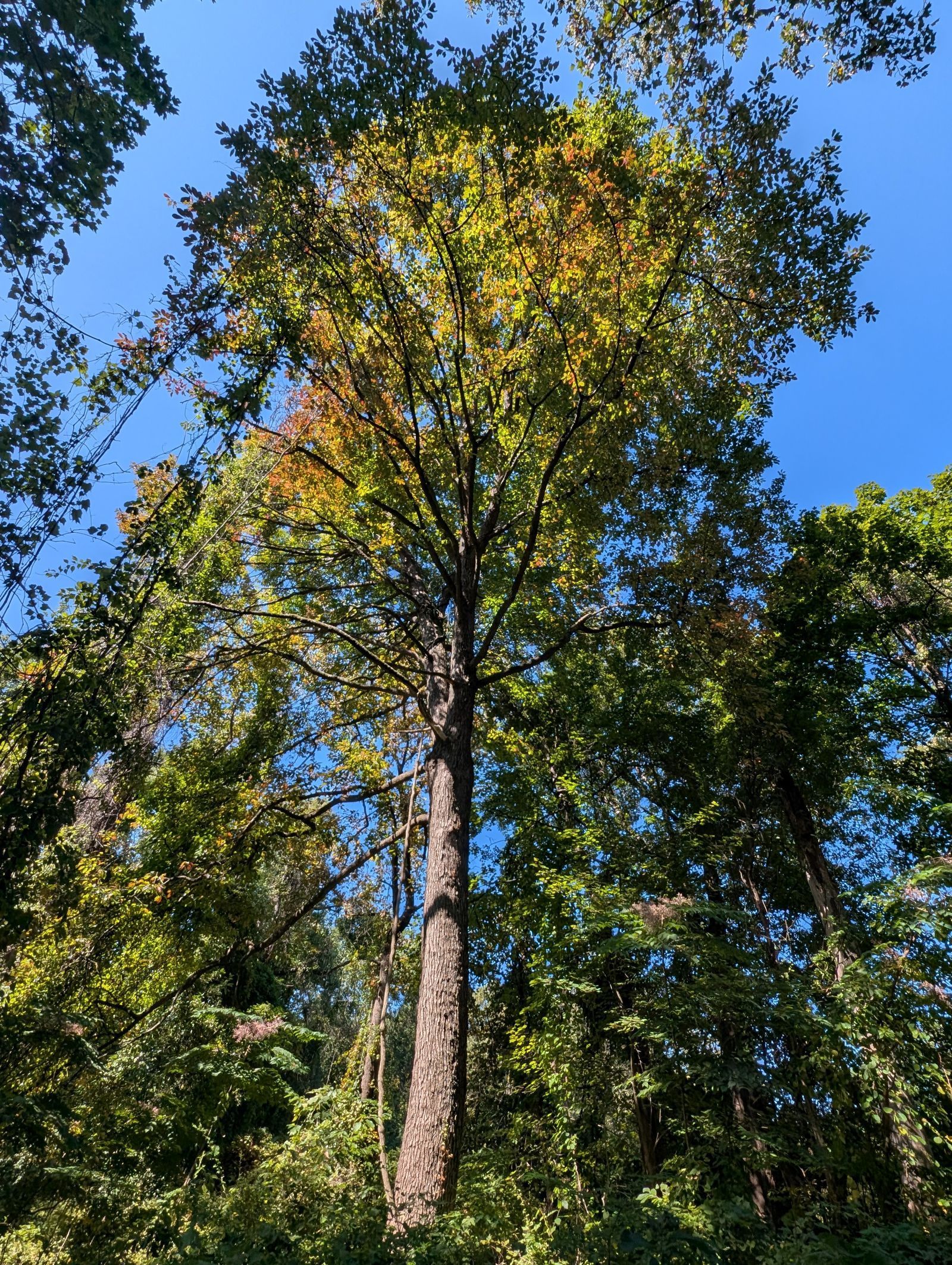
Canopy trees at Tollgate Wyndham Preserve
Our walk at Levickas Woods started out very promising, on a crisp and sunny day with a nice northerly breeze. Before we even entered the woods, we were treated to chatty flocks of Blue Jays, a handful of migrating Monarch Butterflies, and the golden wings of Northern Flickers looking for a place to land. Many birds migrate overnight, and when the sun rises, have to find a place to land to rest and eat. Levickas Woods and other urban green spaces are like a beacon standing out among streets, parking lots, and buildings. In the early morning, you can sometimes see birds making the choice of where to land. This behavior is called “morning flight.” Northern Flickers are a great bird to look for if you want to see morning flight. They are large, not particularly fast, and take their time choosing where to land so they can be seen well into the morning. The birds, as they do sometimes, seemed to evaporate as soon as they entered the forest. But we did run into a handful of colorful migratory species, including a beautiful Northern Parula and a fleeting look at a Black-throated Green Warbler, which was the 80th species seen at Levickas Woods!
The purpose of our bird monitoring program is to document the presence of birds and phenomena like the ones described here so that we can better understand the benefits our sites provide to wildlife, gain insights on the shortcomings they may have, and directly inform our management decisions. For example, because we know that some of our sites have Pileated Woodpeckers, we know to leave dead trees when it is safe to do so.
We have one more bird walk this fall - Saturday October 3rd (8-9:30am) at Volz Neighborhood Park in Middle River - and two more bird monitoring workshops - one on Saturday October 3rd (11am-12pm) at the Essex branch of the Baltimore County Public Library and another on Saturday November 21st at the White Marsh branch of the Baltimore County Public Library. All skill levels are welcome and beginners are absolutely encouraged to come! It’s an amazing time of year and, as we saw last week, the season changes quickly so make sure to get out there and catch the fall before it slips by. Hope to see you there!
Recent Posts