Share this article

NeighborSpace is excited to launch a Stream Monitoring Protocol to assess streams in our forest buffer sites. NeighborSpace conserves five sites, totaling 45 acres, that serve as stream buffers: Levickas Woods and Sawmill Branch in Catonsville, Tollgate Wyndham Preserve in Owings Mills, Volz Neighborhood Park in Middle River, and Norman Creek Park in Essex. This initiative, funded by a Five Star and Urban Waters Restoration Program grant from the National Fish and Wildlife Foundation (NFWF), is modeled on the Maryland Department of Natural Resources (DNR) stream monitoring program and will help NeighborSpace track long-term changes in water quality and habitat conditions.

What is a Stream Buffer?

A stream buffer is a vegetated area along a stream that helps maintain water quality, stabilize banks, and support biodiversity.

Why Stream Buffers Matter

Healthy stream buffers provide a number of ecosystem services and benefits to water quality and human health.  Vegetation along the stream absorbs and filters pollutants, such as excess nitrogen, phosphorus, and sediment, from stormwater before they reach the stream.  Plants also help reduce erosion; plants with deep root systems stabilize the soil and prevent sedimentation.  Buffers also regulate water temperature.  The vegetation provides shade, keeping water cooler and maintaining oxygen levels needed for fish and aquatic life.  Additionally, natural leaf litter, woody debris, and roots create shelter and habitat for fish and insects.

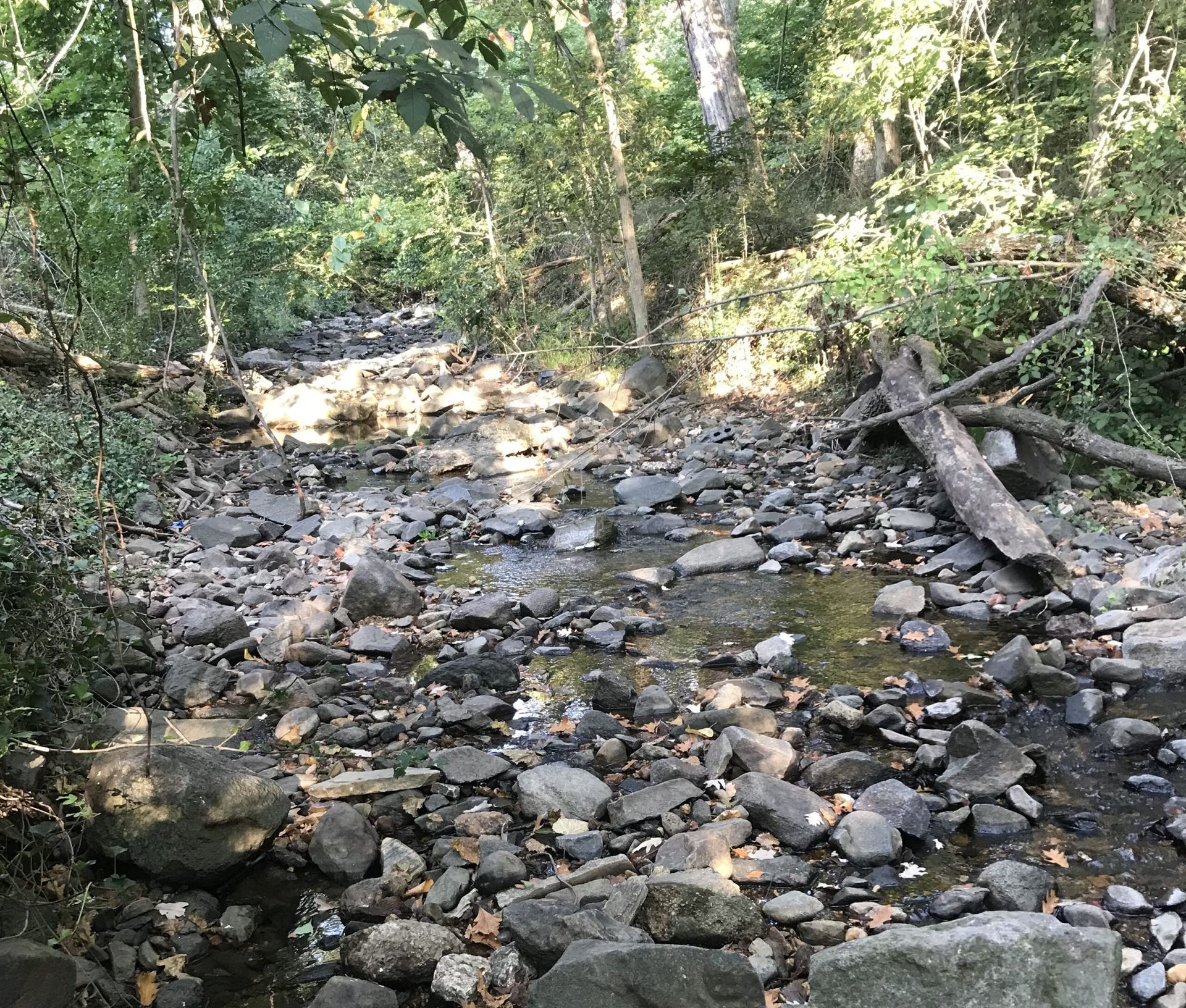
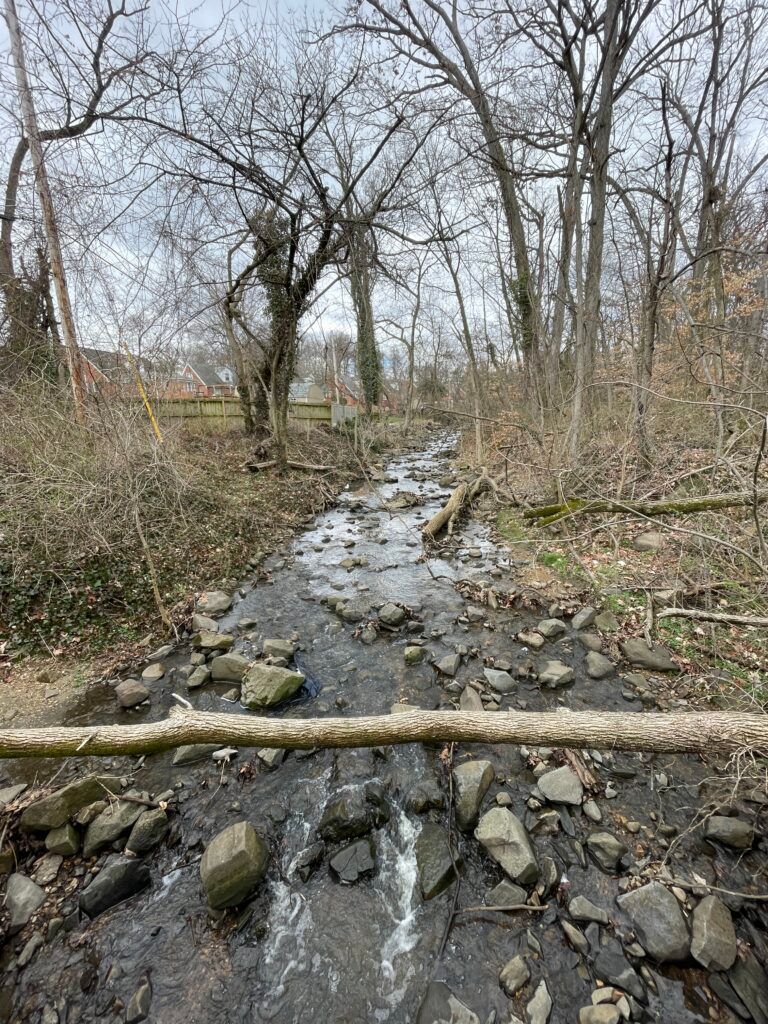
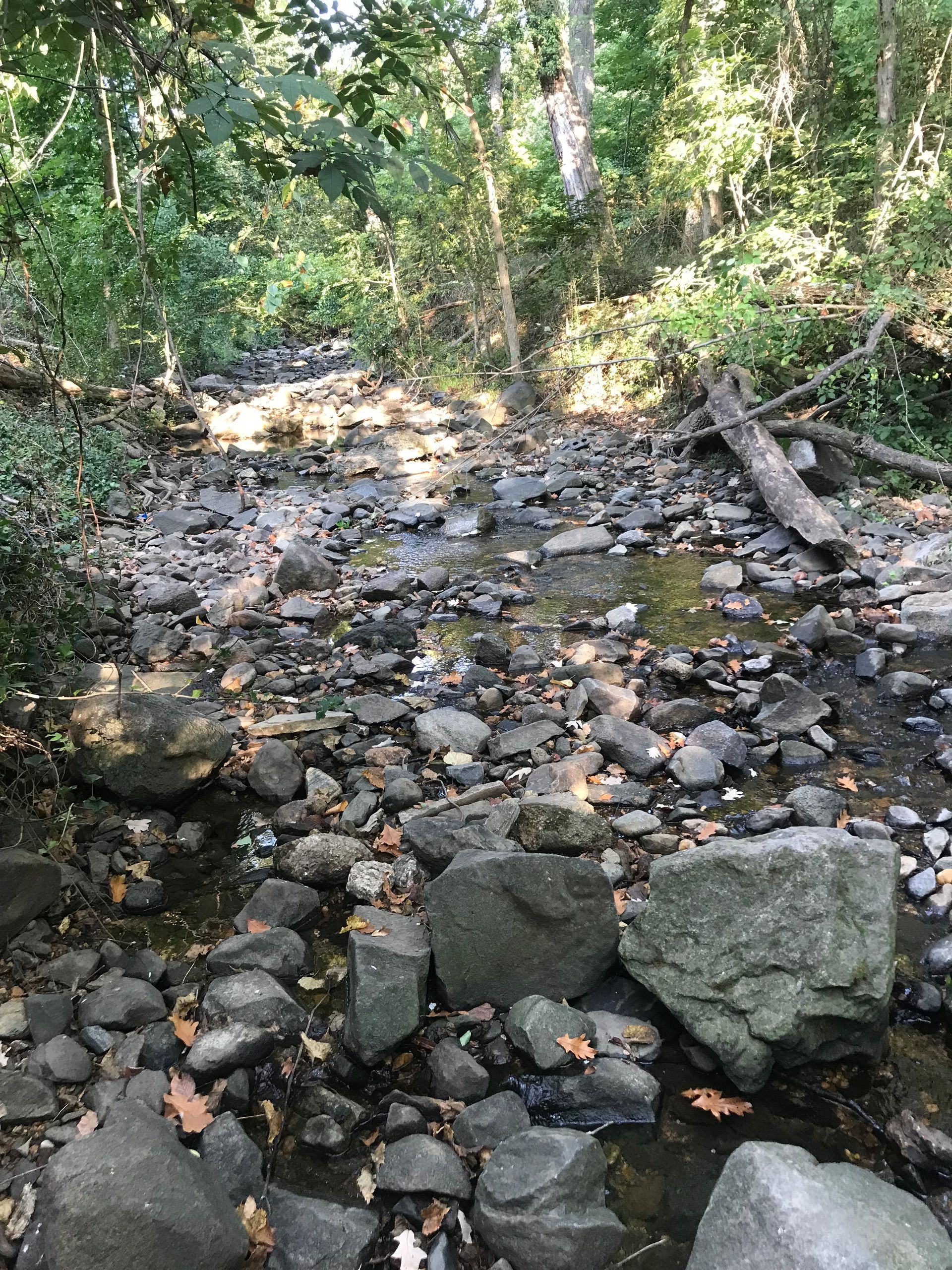
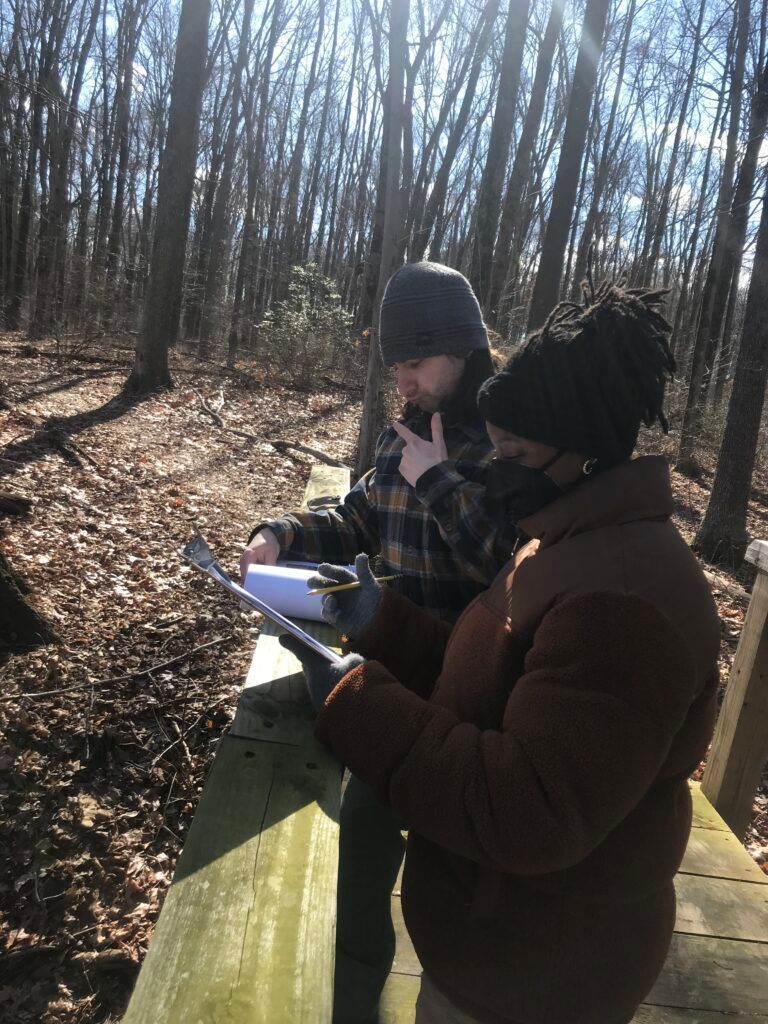
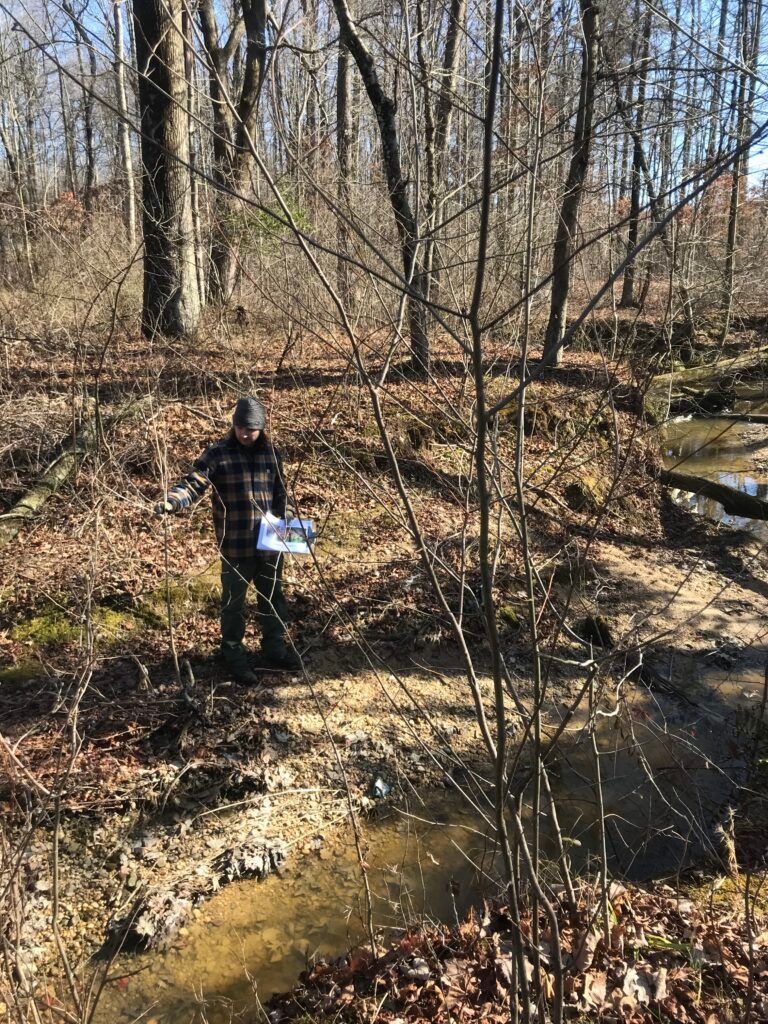
Our team recently completed the first stream assessment at Tollgate Wyndham Preserve.  We plan to conduct assessments annually to monitor changes over time.  The stream running through Tollgate is an unnamed branch of the Upper Gwynns Falls.  Overall, the stream health received a score of “fair” due to erosion in some areas, as well as concerns about sedimentation and nutrient pollution from stormwater runoff.  The stream scored well in healthy vegetated buffer areas, aquatic habitats, and presence of macroinvertebrates.  These findings suggest that the stream is providing habitat, cooling the water, and providing ecosystem benefits.  The assessment also highlights the need for stronger riparian buffers and stormwater management solutions to reduce erosion and run-off to improve long-term water quality.

Restoration Methods: Science-Backed Solutions

NeighborSpace is using the results from stream assessments at our riparian buffer sites to inform our ongoing restoration efforts.  Our restoration efforts focus on stabilizing streambanks, filtering pollutants, and enhancing habitat.  One area of focus is strengthening riparian buffers by planting native trees and perennials such as red maple, sycamore, river birch, spicebush, and elderberry to anchor soil and absorb excess pollutants.  These plants also provide habitat for wildlife.

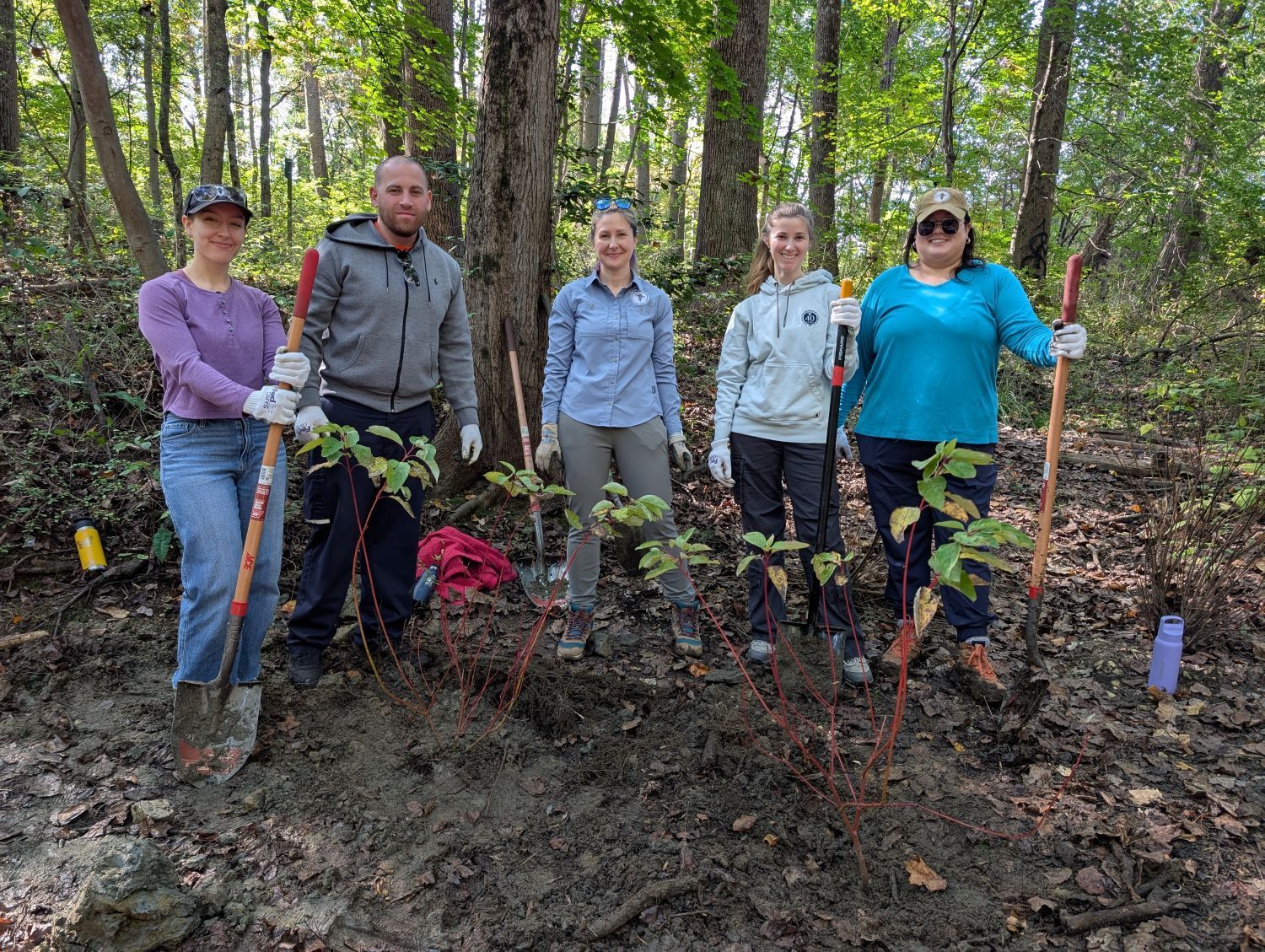
One method to increase vegetation is live staking, a planting method which involves inserting plant stems and branch cuttings directly into the soil along streambanks.  You can live stake with specific species, such as silky dogwood, black willow, and buttonbush, along streambanks.  These plants take root quickly, stabilizing soil and preventing erosion.

We will also be considering upstream stormwater management solutions like rain gardens and bioswales to slow and filter runoff, capturing pollutants before they enter the stream. Additionally, post-assessment restoration efforts may include improving in-stream habitat by retaining natural leaf litter and fallen branches that support macroinvertebrate populations.  These conditions create pools and slow water flow to improve conditions for fish and aquatic insects.

How You Can Get Involved

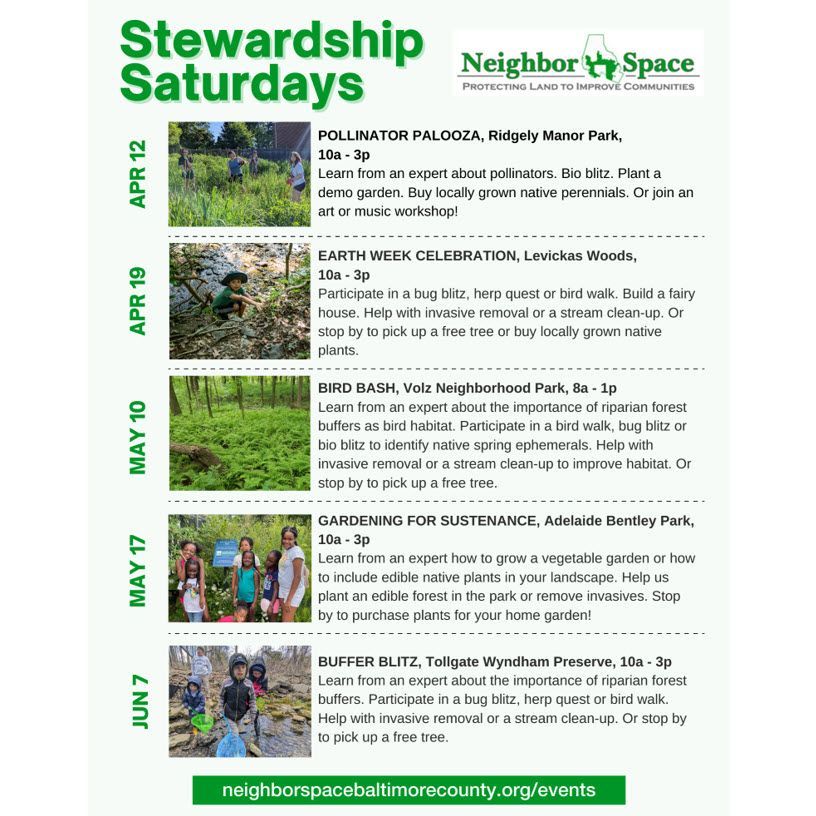
After conducting our initial set of stream assessments this year, NeighborSpace will be seeking volunteers to assist with future stream monitoring, macroinvertebrate surveys, and restoration plantings.  You can also join us at this spring’s Stewardship Saturdays at the following forest buffer sites to learn more about stream buffers, wildlife, and participate in stream restoration plantings.

Saturday, April 19th – Earth Week Celebration – Levickas Woods at Dunmore in Catonsville

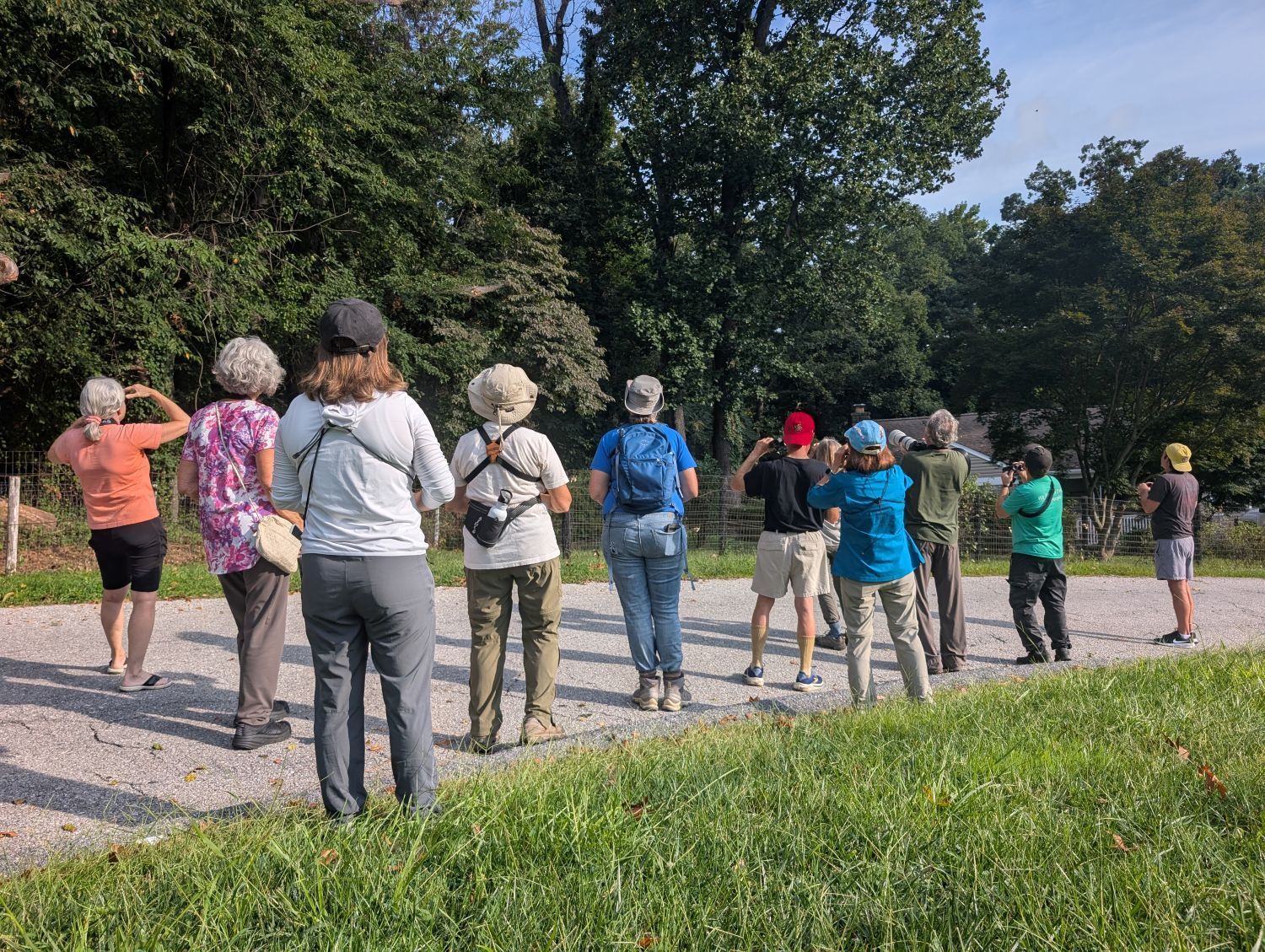
Saturday, May 10th – Bird Bash – Volz Neighborhood Park in Middle River

Saturday, June 7th – Buffer Day – Tollgate Wyndham Preserve in Owings Mills

Recent Posts

By Will Kaselow August 10, 2026
Live Music and Ribbon Cutting at Graystone 7/28/26 | Will Kaselow, Community Conservation Manager
By Will Kaselow July 29, 2026
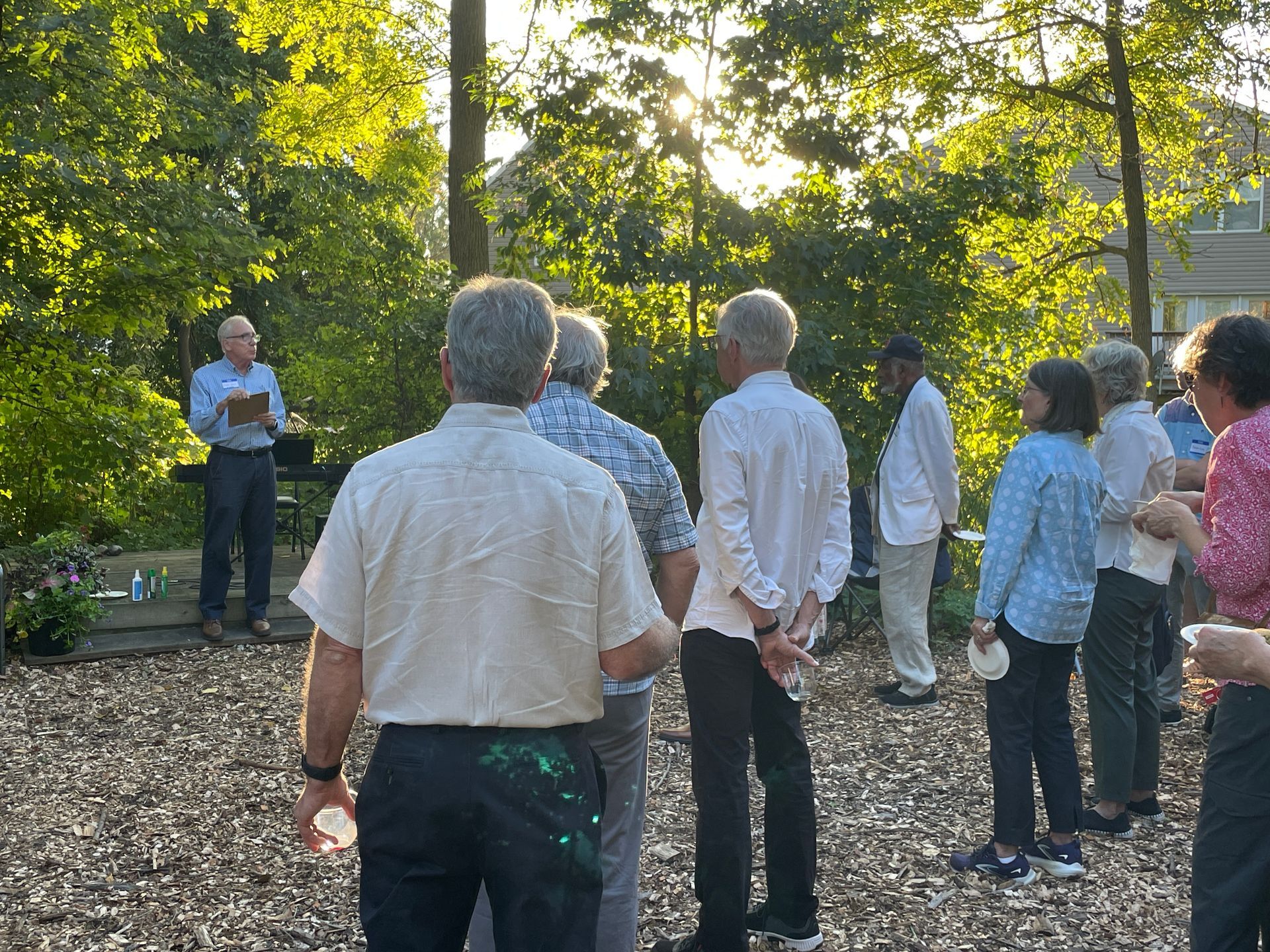
7/28/26 | Will Kaselow, Community Conservation Manager Thank you to everyone who came out to NeighborSpace’s final concert of the summer! After the original date was cancelled due to wildfire-related air pollution, we were able to quickly reschedule and ended up lucking into one of the most beautiful nights of the summer so far. We […]
By Phyllis Joris July 29, 2026
7/29/2026 | Phyllis Joris, Executive Director Like many nonprofits, NeighborSpace operates on a fiscal year that runs July through June. This month, NeighborSpace staff and board members took stock of progress made in the past year and drafted a work plan for the coming year. More details will be provided in NeighborSpace’s Annual Report, which […]
By Carol Partonen July 29, 2026
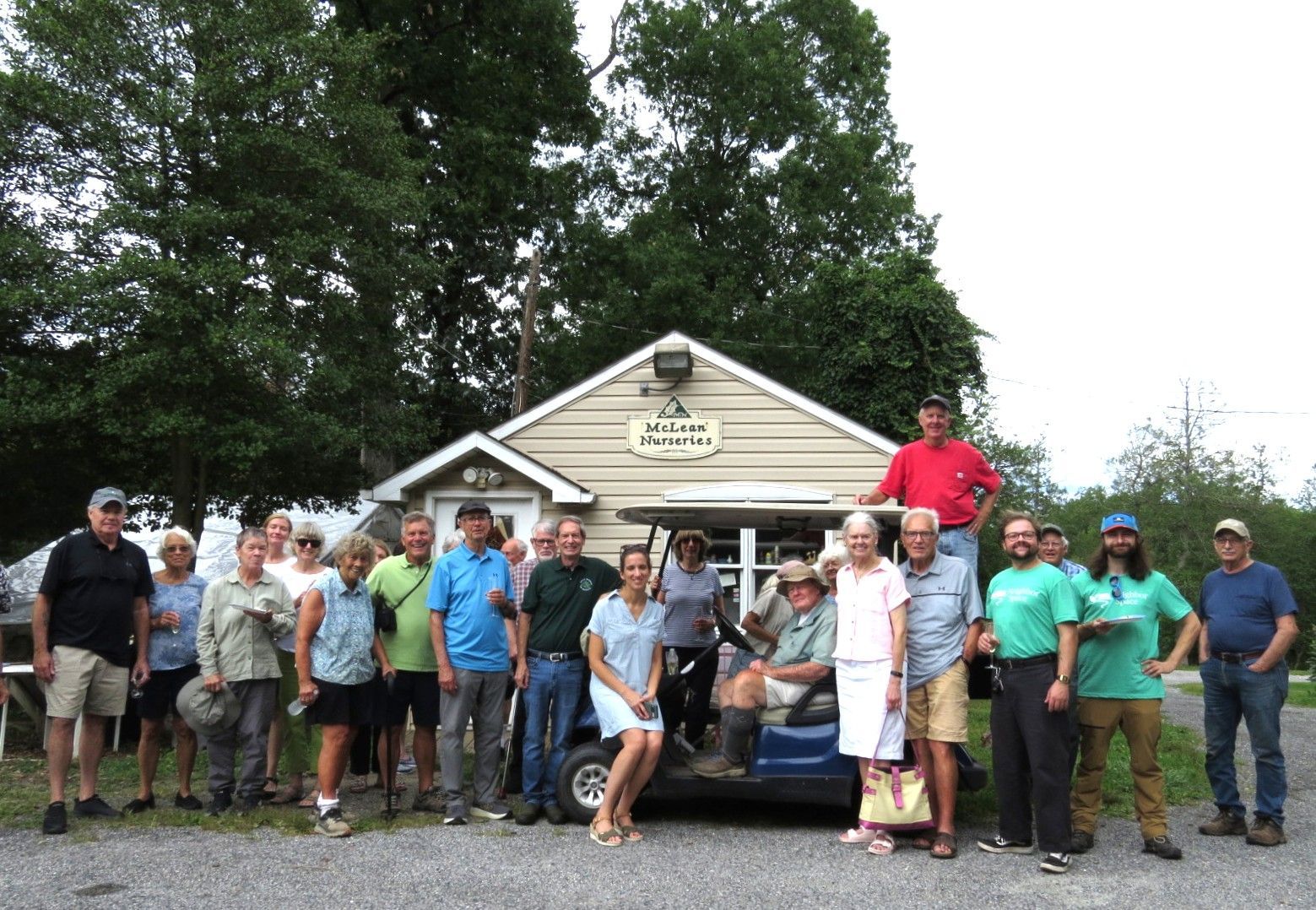
Thanks to donations from generous supporters like you, NeighborSpace was able to hire three interns this summer. We want to help young conservationists gain fieldwork and behind-the-scenes experience, and staff is grateful for the extra hands and minds! We introduced you to our stewardship interns last month.Now read on to meet our communications intern, Mykiah. […]
By Carol Partonen July 28, 2026
Barbara Waters While I grew up in Massachusetts and then spent 6 years in Northern Maine, I have now lived in Maryland for nearly 32 years. I had been involved in many things in the community, but that involvement really ramped up once the pandemic started. To combat isolation, I started walking daily, and have […]
By Carol Partonen June 29, 2026
Thanks to donations from generous supporters like you, NeighborSpace was able to hire three interns this summer. We want to help young conservationists gain fieldwork and behind-the-scenes experience, and staff is grateful for the extra hands and minds! Read on to meet our two stewardship interns, Ashley and Katie. Hi! I am Ashley Metzbower. I […]
By Will Kaselow June 29, 2026
6/29/26 | Will Kaselow, Community Conservation Manager This month we welcomed the summer with song, hosting live music events at two of our sites! First, Patrick Alban and his Buena Vista Social Club joined us at Ridgely Manor Park in Towson on one of the hottest nights of the year so far. Despite the heat, […]
By Conor Harrington June 29, 2026
6/29/26 | Conor Harrington, Land Steward This spring, NeighborSpace installed its first microforest/Miyawaki plantings at Tollgate Wyndham Preserve in Owings Mills. With the help of some very dedicated volunteer groups from BGE and Stanley Black & Decker, we planted about 150 trees and shrubs in three contained locations of the preserve. The area covered by […]
By Phyllis Joris June 29, 2026
6/29/2026 | Phyllis Joris, Executive Director NeighborSpace recently added a new site to its portfolio! With the addition of Stonegate, a beautiful 16-acre property in Catonsville, NeighborSpace now protects 116 acres across 22 sites for current and future residents of urban Baltimore County. This property is co-held with Maryland Environmental Trust (MET), the state’s land […]
By Will Kaselow May 29, 2026
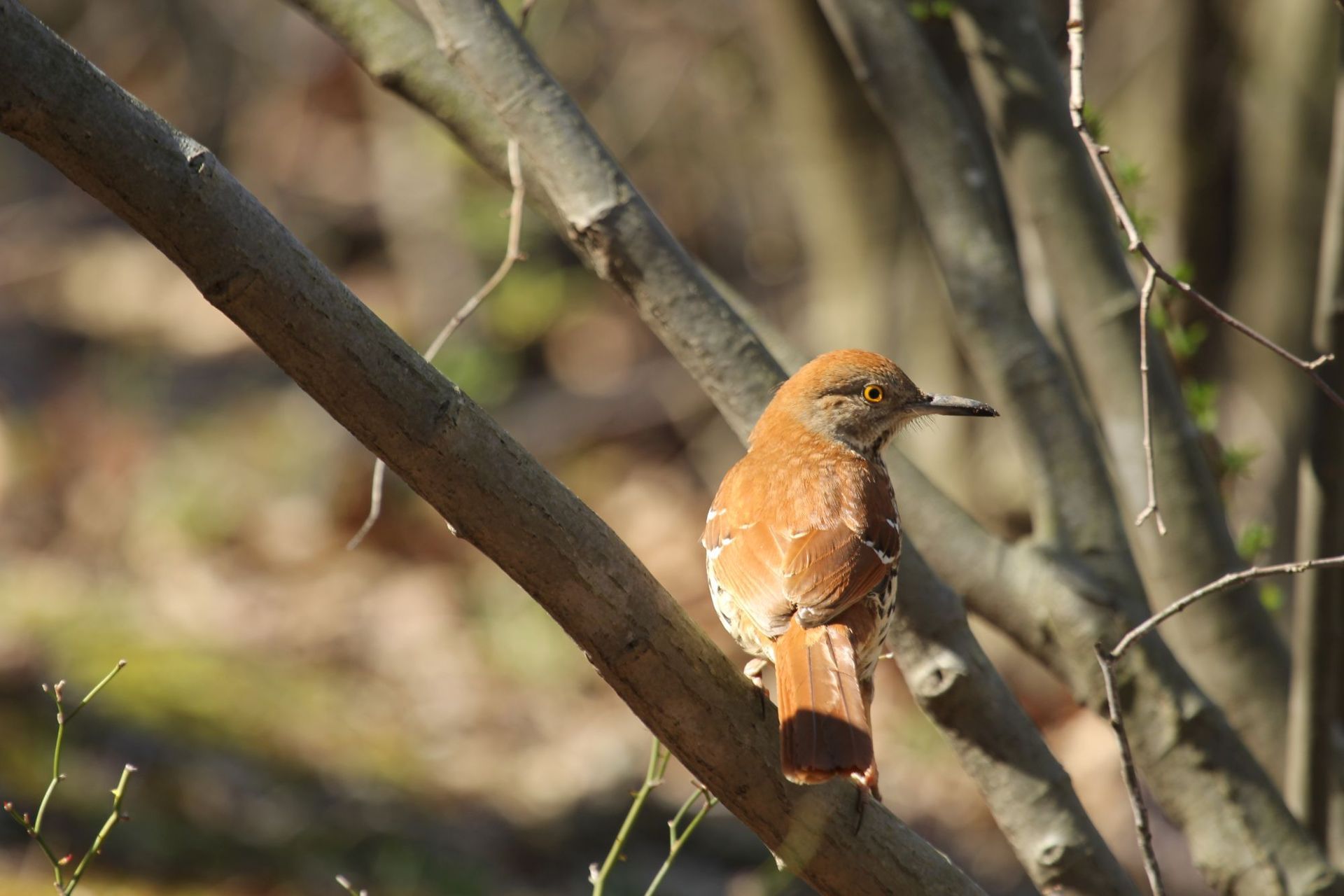
This month we would like to thank Christie Bianco for her time and dedication as a NeighborSpace volunteer! Christie has lived in the Dunmore community for 21 years and first connected with Levickas Woods through her children, who would play in the woods and catch crayfish in the stream. She considers the woods to be […]
Show More