Share this article

As we shared in September, NeighborSpace was awarded a $60,000 grant from the National Fish and Wildlife Foundation through its Five Star and Urban Waters program for a project that blends hands-on restoration with public educational opportunities and a community science program and that will run through February 2026.* The ultimate goal is to restore and sustain healthy habitat at the three NeighborSpace sites that serve as riparian forest buffers: Levickas Woods (Catonsville), Tollgate Wyndham Preserve (Owings Mills) and Volz Neighborhood Park (Middle River).

The first step is to thoroughly get to know these sites, on a number of levels. 

  • Canopy and understory health: Do we have a healthy population of mature canopy trees of different species and at various stages in their life cycle? Are there areas where trees are threatened by vines? Is the next generation of saplings robust or do we need to supplement the understory with younger trees or different species? If species diversity is adequate, what native tree species are present and thriving and might we want to plant more of in similar conditions?

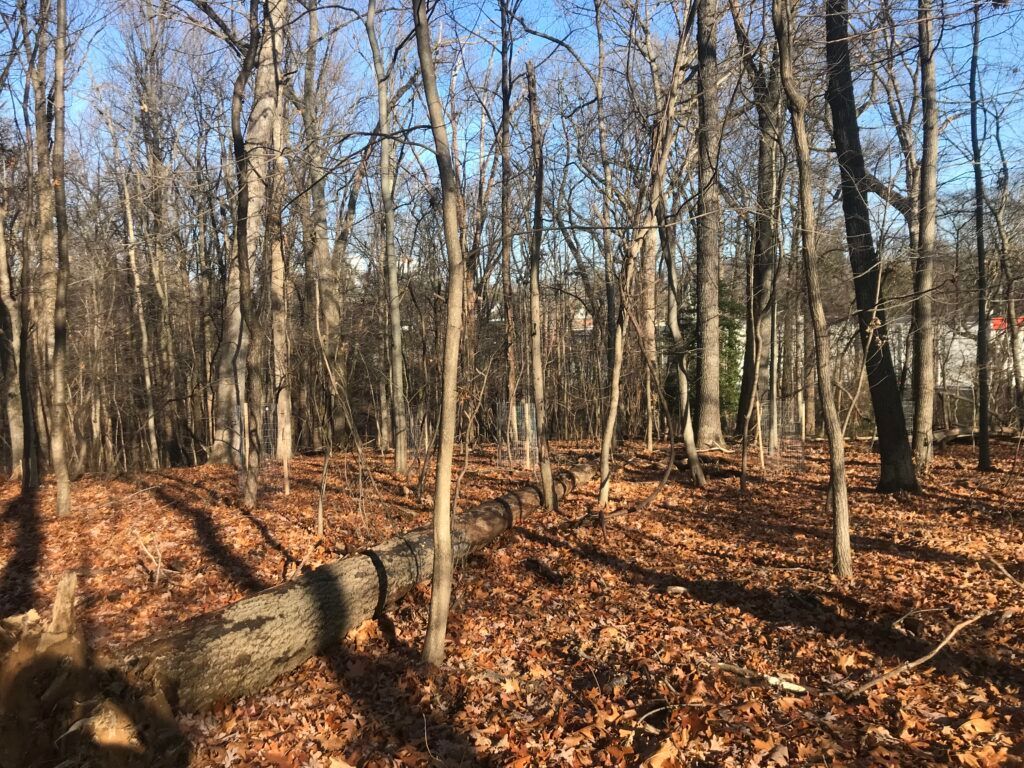
Mature, adolescent and baby trees at Tollgate Wyndham Preserve

  • Groundcover health: What is the ratio of native to non-native shrubs, perennials and groundcovers? What native plant species are present? How can we help those species thrive and spread? Do we want to add other native species to the landscape? What invasive species are present and what threat do they pose? We will likely divide each site into different areas, tiered by their level of infestation, the prevalent species of invasive plant and the speed at which it is known to spread. In general, when removing invasives, we prioritize areas with the lowest density of infestation to prevent the spread and then gradually move inward, with the ultimate goal of replacing the invasive population with a healthy native ecosystem.

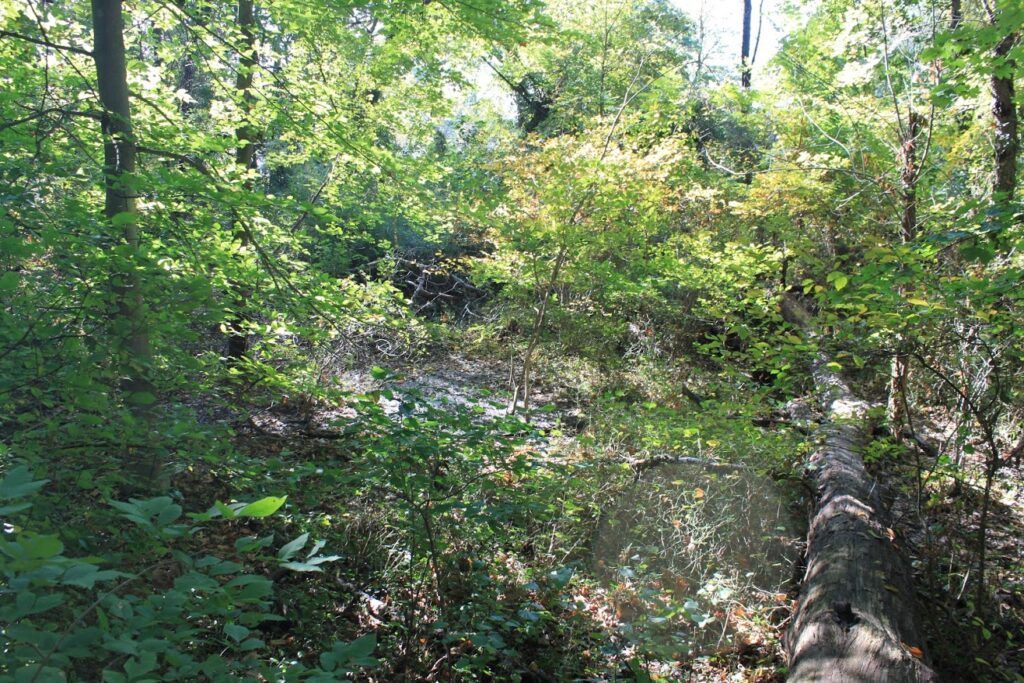
Layers at Levickas Woods, including: English Ivy on the forest floor (non-native invasive vine), spicebush in the understory (native shrub) and beech in the canopy (native tree).

  • Wildlife: Which animals already call these sites home? How can we improve their habitat? Are certain animal species absent that we would expect to see, and what habitat essentials might be missing from the site?

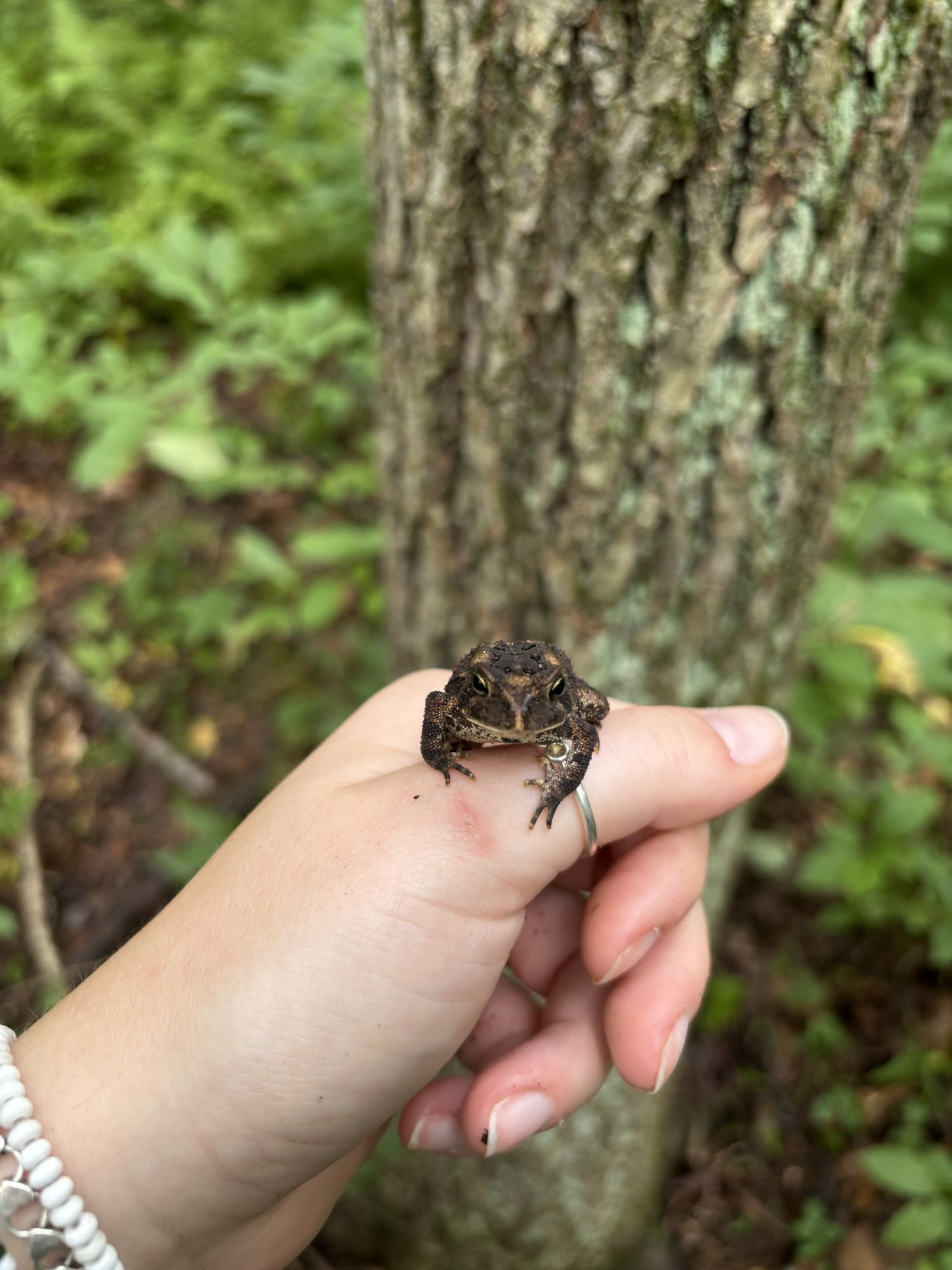
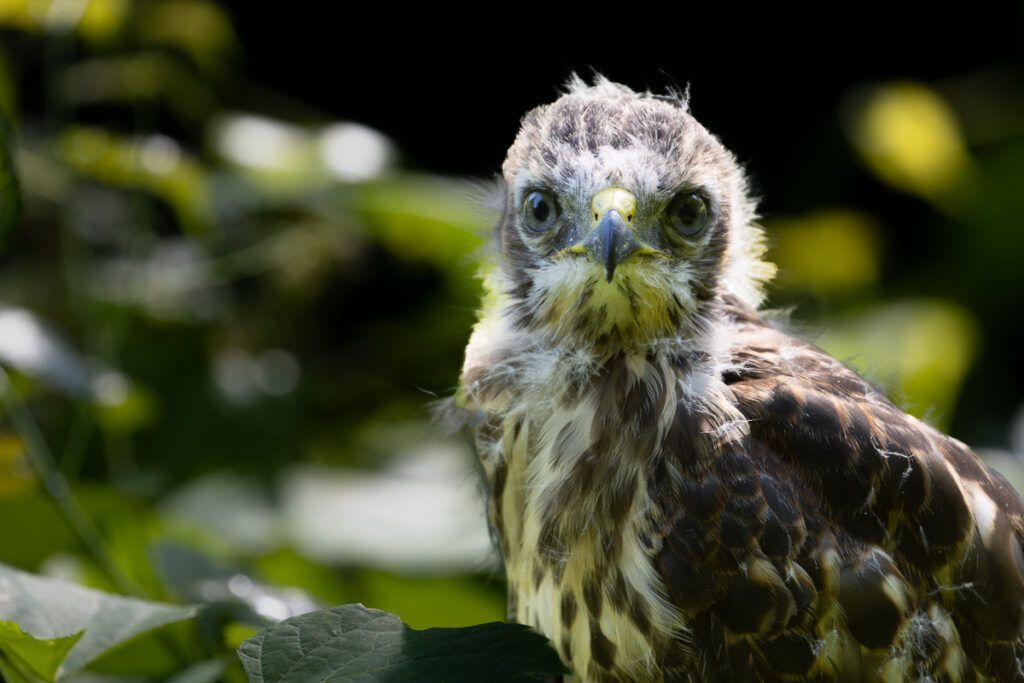
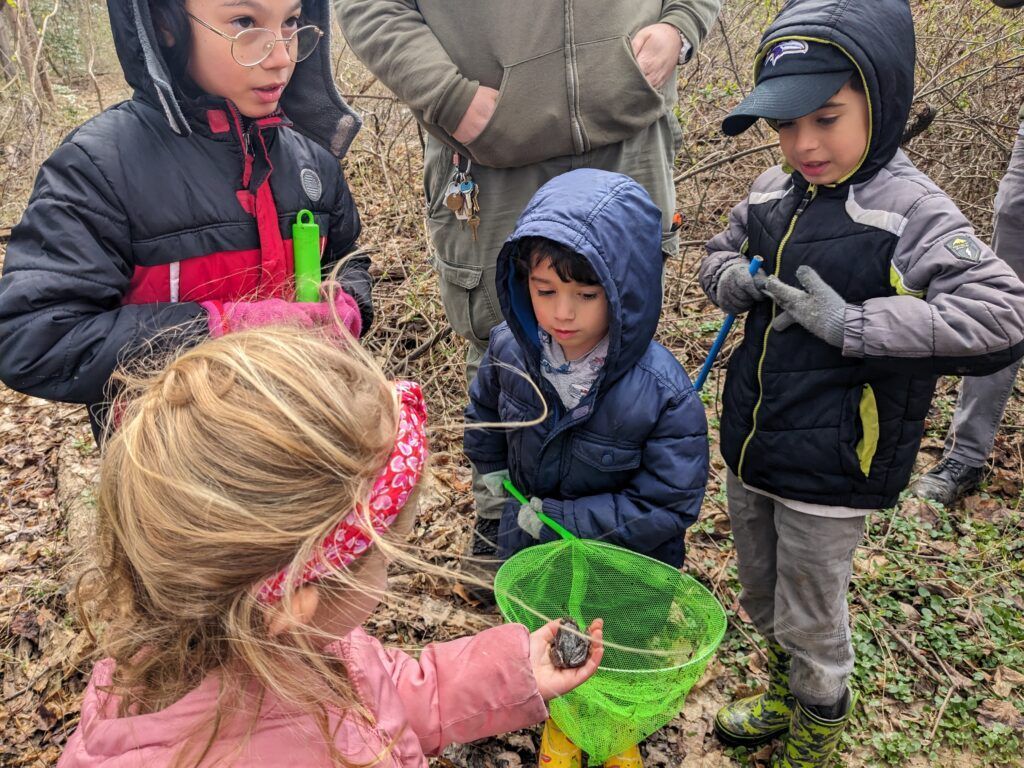
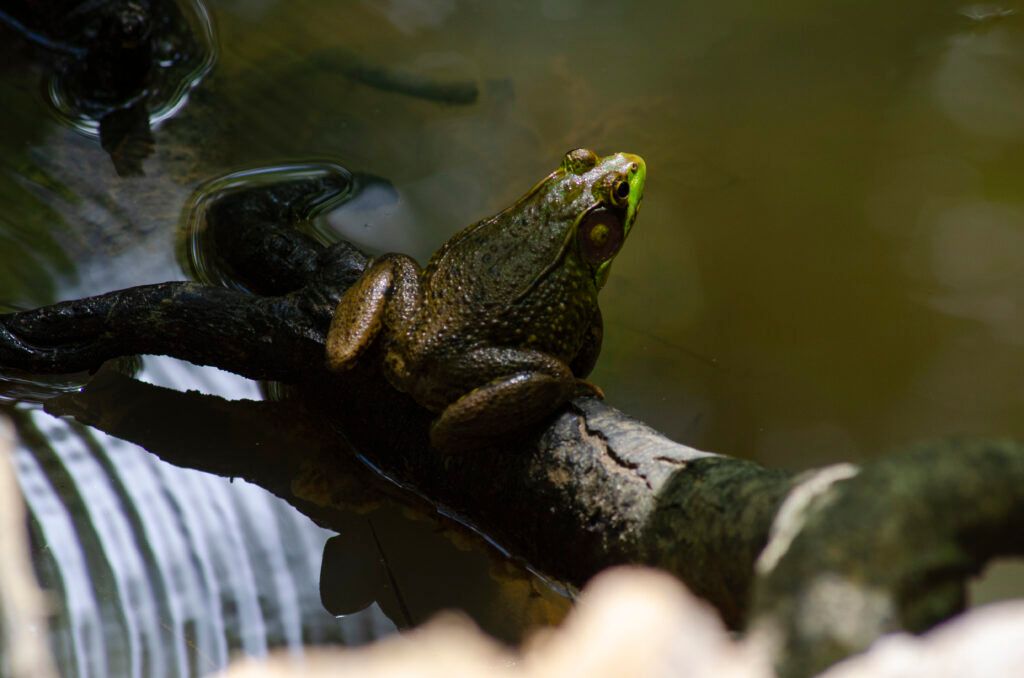
From left to right: juvenile red-shouldered hawk at Levickas Woods, wood frog and humans at Tollgate Wyndham Preserve, green frog at Volz Neighborhood Park

  • Stream health: Is the stream connected to its floodplain or are the banks severely eroded? What do simple measurements tell us about the water quality and are there actions we can take to improve it?

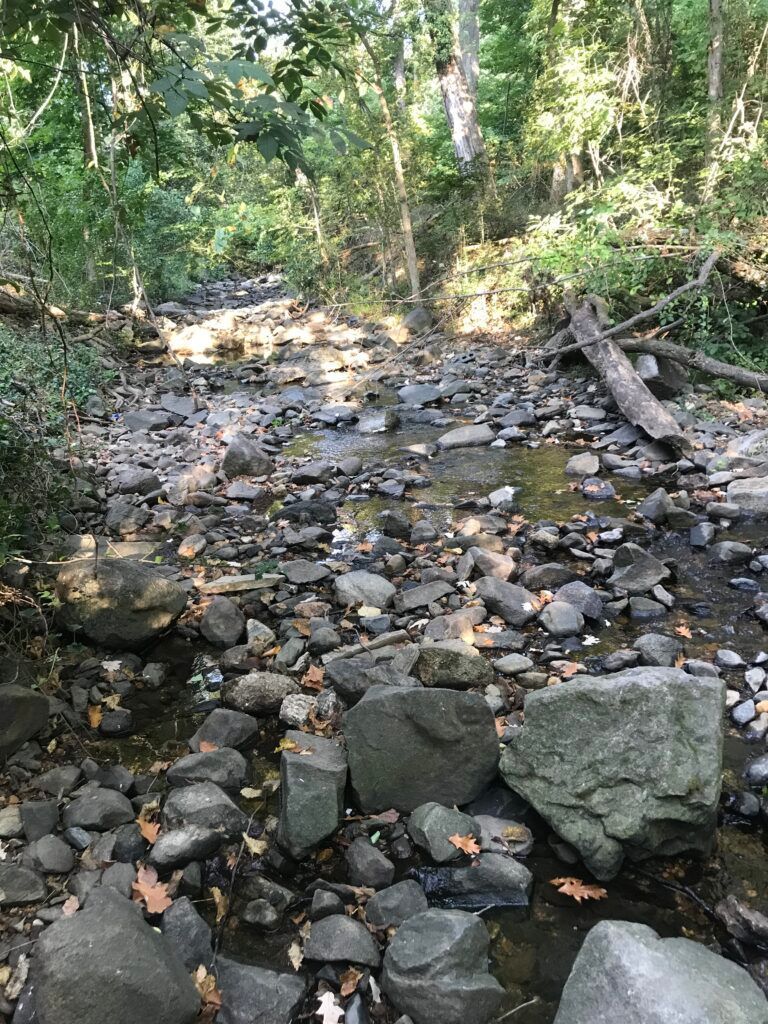
A portion of the streams at Tollgate Wyndham Preserve (left) and Levickas Woods (right). Being able to see rocks clearly in a stream is one visual indicator of good stream health. The spaces between layers of gravel, small stones and boulders provide crucial habitat for small aquatic bugs such as caddisflies.

These observations will inform which restoration actions we take in the next phase of the project. For example, Yellow Warblers prefer to nest in dense shrubs, so if we observe Setophaga petechia at one of our sites, we might plant alder or willow shrubs along the stream, and maybe some wax myrtle to supplement their summer diet. Or if stream banks are eroded and suitable tree species are present, such as willows or red twig dogwood, we might consider live staking as an effort to stabilize the banks. If we uncover healthy sedges while removing invasives, for example, the best approach might be to keep the area clear to allow them to spread or we might choose to fill in the cleared soil with additional quarts of Carex pensylvanica.

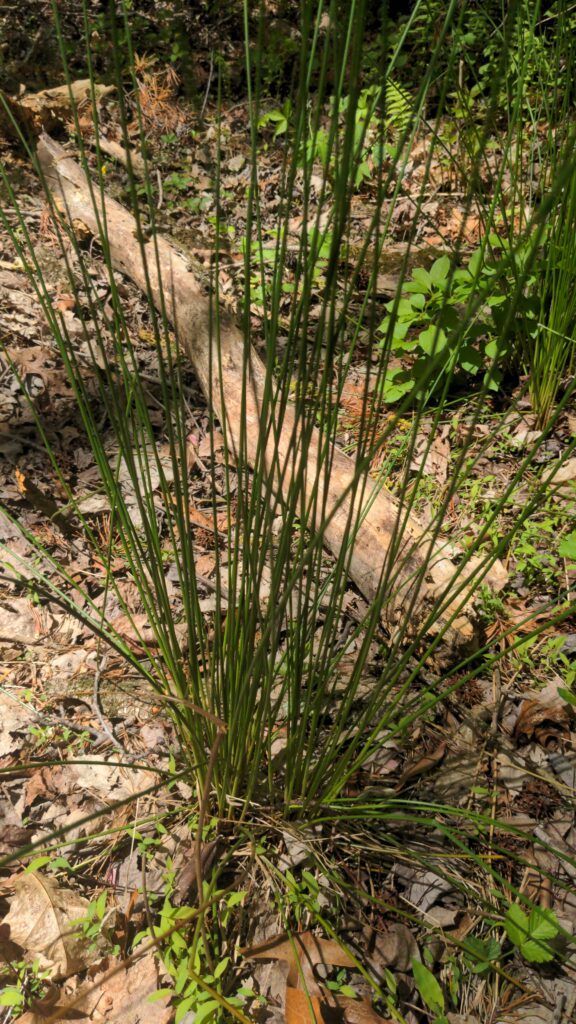
A sedge (left) and a rush (right) at Volz Neighborhood Park. If you have trouble remembering which is which, the rhyme “sedges have edges and rushes are round” can prove helpful.

All this to say, we want to understand the existing ecosystem and establish a baseline to measure future progress against. Restoration activities should strengthen the existing ecosystem by allowing species that are already doing well to flourish and by supporting struggling species by removing threats and bringing in missing elements. By continuing to make observations on a regular basis, we’ll be able to track the impact of our restoration efforts, observe which techniques are successful and adjust our approach where needed.

Over the winter, NeighborSpace staff has consulted a variety of resources and a number of experts and we are working to finalize a new assessment protocol to collect, document and track data on trees, other plant growth, wildlife, stream health and possibly soil health.

This is where we could use your help! If you would like to assist in surveying NeighborSpace sites, please let us know. If you are a plant ID expert, a birder, an amateur entomologist or herpetologist, and you are willing to donate a few hours to make observations at one or more NeighborSpace parks, we would greatly appreciate it. If you don’t fall in any of those categories but you are an outdoor enthusiast willing to share your time with NeighborSpace, we would welcome your help. Please reach out to me at phyllis@neighborspacebaltimorecounty.org or (443)850-2756 to set up a meeting with a staff member.

Recent Posts

By Will Kaselow August 10, 2026
Live Music and Ribbon Cutting at Graystone 7/28/26 | Will Kaselow, Community Conservation Manager
By Will Kaselow July 29, 2026
7/28/26 | Will Kaselow, Community Conservation Manager Thank you to everyone who came out to NeighborSpace’s final concert of the summer! After the original date was cancelled due to wildfire-related air pollution, we were able to quickly reschedule and ended up lucking into one of the most beautiful nights of the summer so far. We […]
By Phyllis Joris July 29, 2026
7/29/2026 | Phyllis Joris, Executive Director Like many nonprofits, NeighborSpace operates on a fiscal year that runs July through June. This month, NeighborSpace staff and board members took stock of progress made in the past year and drafted a work plan for the coming year. More details will be provided in NeighborSpace’s Annual Report, which […]
By Carol Partonen July 29, 2026
Thanks to donations from generous supporters like you, NeighborSpace was able to hire three interns this summer. We want to help young conservationists gain fieldwork and behind-the-scenes experience, and staff is grateful for the extra hands and minds! We introduced you to our stewardship interns last month.Now read on to meet our communications intern, Mykiah. […]
By Carol Partonen July 28, 2026
Barbara Waters While I grew up in Massachusetts and then spent 6 years in Northern Maine, I have now lived in Maryland for nearly 32 years. I had been involved in many things in the community, but that involvement really ramped up once the pandemic started. To combat isolation, I started walking daily, and have […]
By Carol Partonen June 29, 2026
Thanks to donations from generous supporters like you, NeighborSpace was able to hire three interns this summer. We want to help young conservationists gain fieldwork and behind-the-scenes experience, and staff is grateful for the extra hands and minds! Read on to meet our two stewardship interns, Ashley and Katie. Hi! I am Ashley Metzbower. I […]
By Will Kaselow June 29, 2026
6/29/26 | Will Kaselow, Community Conservation Manager This month we welcomed the summer with song, hosting live music events at two of our sites! First, Patrick Alban and his Buena Vista Social Club joined us at Ridgely Manor Park in Towson on one of the hottest nights of the year so far. Despite the heat, […]
By Conor Harrington June 29, 2026
6/29/26 | Conor Harrington, Land Steward This spring, NeighborSpace installed its first microforest/Miyawaki plantings at Tollgate Wyndham Preserve in Owings Mills. With the help of some very dedicated volunteer groups from BGE and Stanley Black & Decker, we planted about 150 trees and shrubs in three contained locations of the preserve. The area covered by […]
By Phyllis Joris June 29, 2026
6/29/2026 | Phyllis Joris, Executive Director NeighborSpace recently added a new site to its portfolio! With the addition of Stonegate, a beautiful 16-acre property in Catonsville, NeighborSpace now protects 116 acres across 22 sites for current and future residents of urban Baltimore County. This property is co-held with Maryland Environmental Trust (MET), the state’s land […]
By Will Kaselow May 29, 2026
This month we would like to thank Christie Bianco for her time and dedication as a NeighborSpace volunteer! Christie has lived in the Dunmore community for 21 years and first connected with Levickas Woods through her children, who would play in the woods and catch crayfish in the stream. She considers the woods to be […]
Show More