Late summer is the season of Goldenrods (genus Solidago
, family Asteraceae
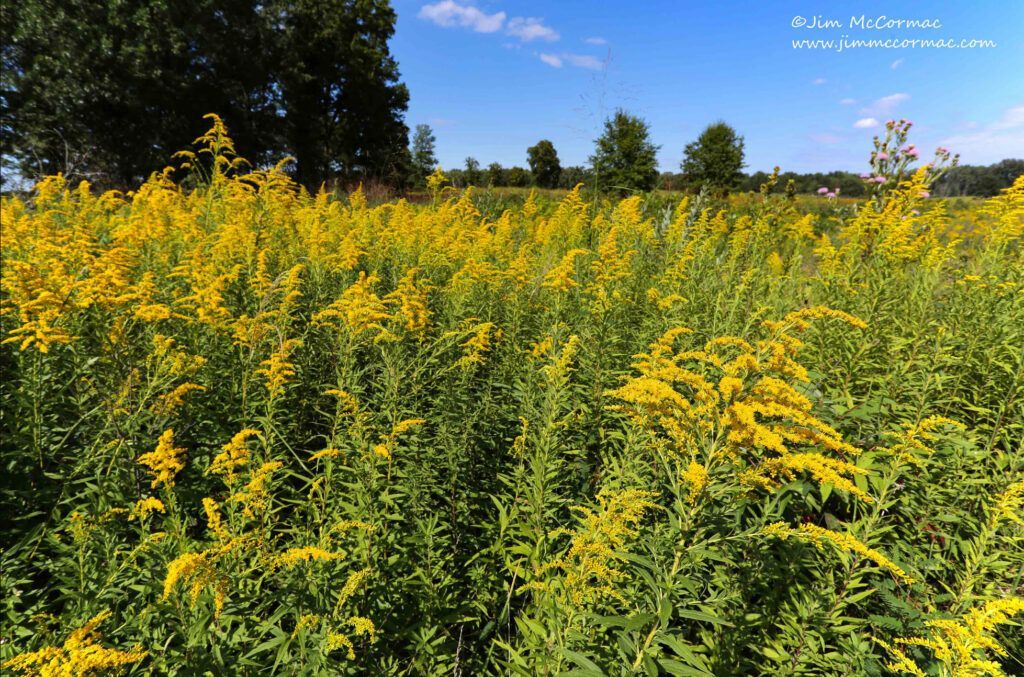
). In flower beds, along roadsides, and throughout native meadows, bright yellow flowers begin to open in August, with blooms lasting well into October. With over 100 varieties native to North America, and several native to Maryland, these late-blooming wildflowers provide vital nectar and habitat for pollinators preparing for the approach of winter. Due to the diversity of goldenrod species, there is a goldenrod for almost every habitat one could find on their property in Baltimore County.
“Hardy and adaptable, there is a goldenrod species to suit almost any growing condition. One thing to note, however; rich, fertile soils can result in tall, aggressive growth, like that of the Canada goldenrod (S. canadensis). These flowering plants are held in check by dry, far-from-ideal soils and root competition by other perennial plants. Some like the shade, like bluestem goldenrod (S. caesia) and zig-zag goldenrod (S. flexicaulis). Some like wetter areas like the narrow- or grass-leaved goldenrod (Euthamia graminifolia/S. graminifolia). The gray, or old field, goldenrod (S. nemoralis) actually thrives in poor soils that are very dry, barren or stripped. In addition to being perennial natives and vigorous self-seeders, goldenrods are resistant to deer and rabbit browse, don’t need fertilizer and rarely need supplemental watering.
“
Photo by Jim McCormac
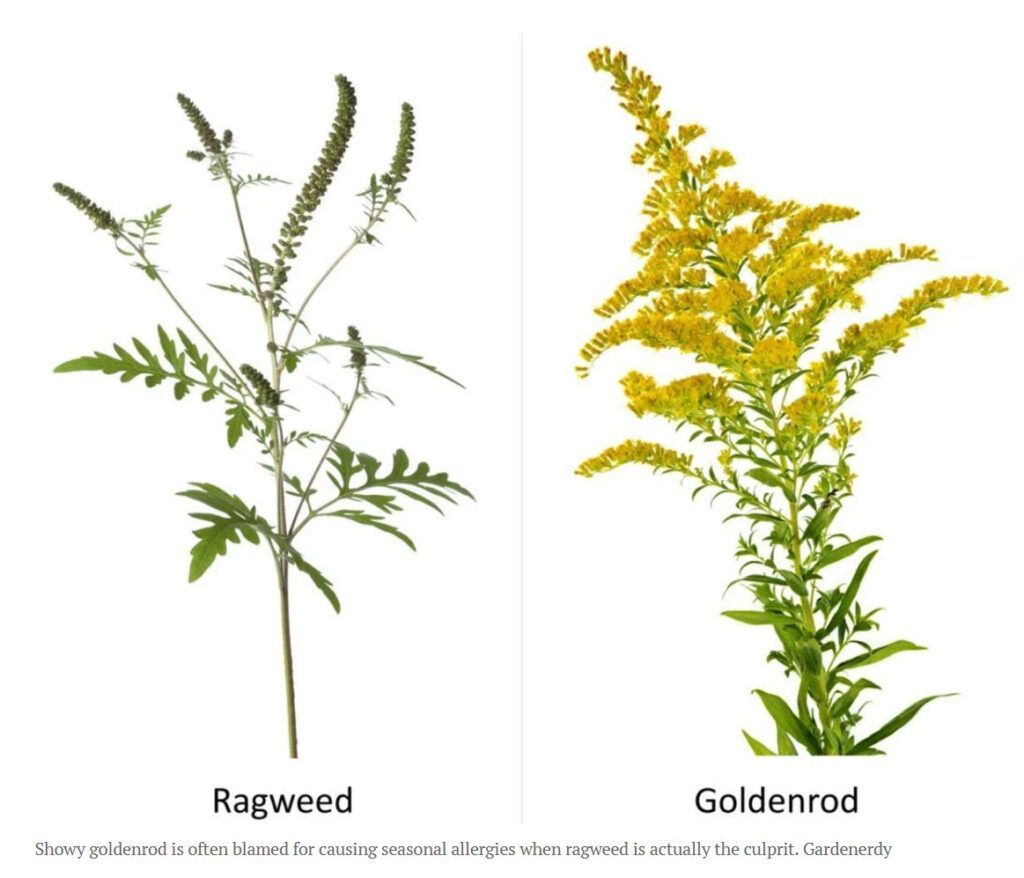
Though one of the most beneficial plants to support a native ecosystem in Maryland, goldenrod gets a bad reputation. This is likely due to it being confused with ragweed, the bane of those with autumn allergies. Goldenrod pollen is heavy and sticky, requiring insects for pollination. Ragweed pollen is light and able to take to the air, as ragweed is pollinated by the wind. Do not make the mistake of shunning goldenrod from your native garden! It will not contribute to allergies.
Photo from Gardenerdy
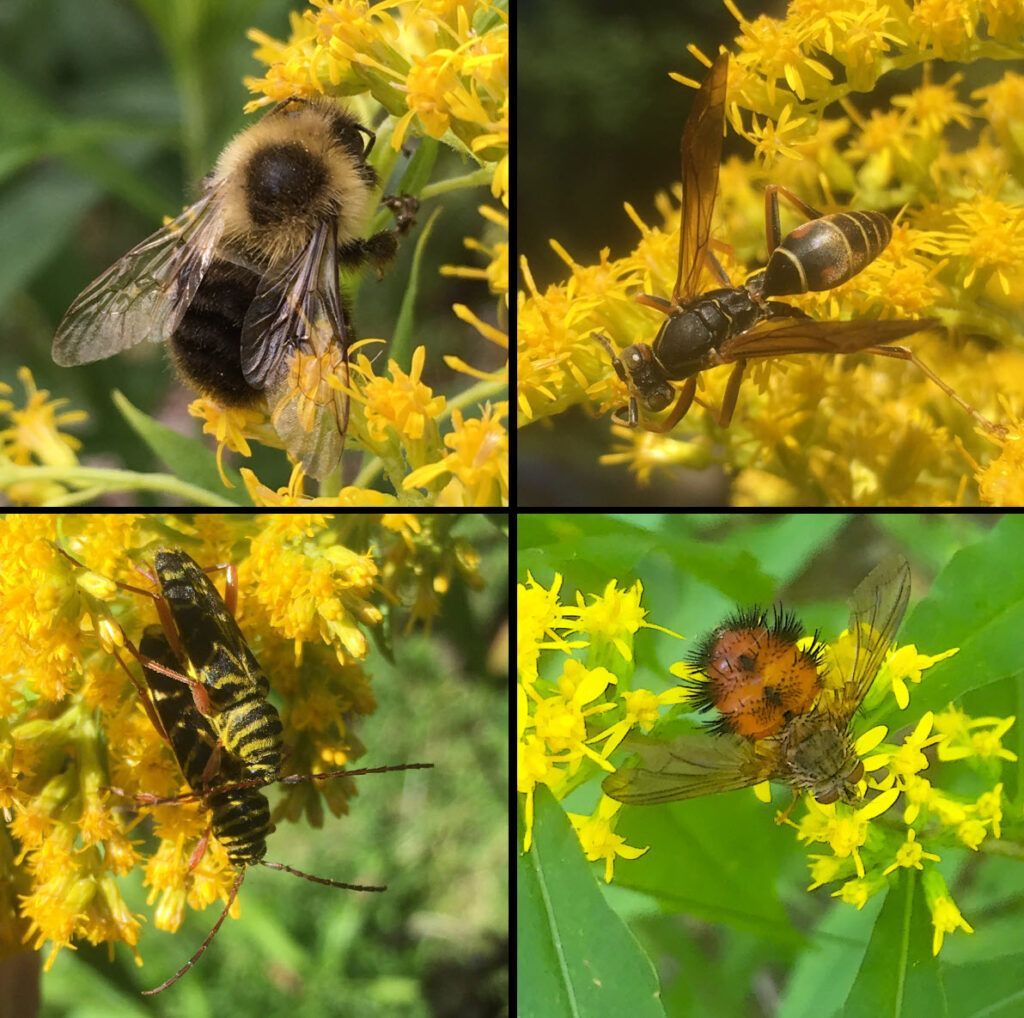
Instead, goldenrod will contribute to the biodiversity of your region. Where I live, according to the Native Plant Finder from the National Wildlife Federation, 118 species of moths and butterflies use goldenrod as a caterpillar host plant. Not only does it support moths and butterflies, it supports hundreds of insect species, including as one of the most recurrent host plant genera for native pollen specialist bees, as described in this study
by Jarrod Fowler and Sam Droege. Because they create tall hollow stems, they act as nesting resources for stem-nesting bees.
Photo by Margy Nelson
If you are looking for a powerhouse native plant to add to your garden, look no further than a hardy, beneficial, beautiful Solidago
!
7/28/26 | Will Kaselow, Community Conservation Manager Thank you to everyone who came out to NeighborSpace’s final concert of the summer! After the original date was cancelled due to wildfire-related air pollution, we were able to quickly reschedule and ended up lucking into one of the most beautiful nights of the summer so far. We […]
7/29/2026 | Phyllis Joris, Executive Director Like many nonprofits, NeighborSpace operates on a fiscal year that runs July through June. This month, NeighborSpace staff and board members took stock of progress made in the past year and drafted a work plan for the coming year. More details will be provided in NeighborSpace’s Annual Report, which […]
Thanks to donations from generous supporters like you, NeighborSpace was able to hire three interns this summer. We want to help young conservationists gain fieldwork and behind-the-scenes experience, and staff is grateful for the extra hands and minds! We introduced you to our stewardship interns last month.Now read on to meet our communications intern, Mykiah. […]
Barbara Waters While I grew up in Massachusetts and then spent 6 years in Northern Maine, I have now lived in Maryland for nearly 32 years. I had been involved in many things in the community, but that involvement really ramped up once the pandemic started. To combat isolation, I started walking daily, and have […]