Share this article

Why Saving Insects Should Matter to You
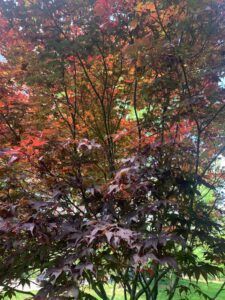

A Japanese Maple in Homeland

It’s n o secret that nature can liven up suburban areas, bring in people and build a community. For years, people have been planting flowers, trees, bushes, etc. Although any plantings can have benefits, have we been smart with what we are planting? That question can be very confusing to someone who isn’t familiar with native and non-native plants.

Essentially, a non-native plant is a plant that has been introduced from a different region. Unfortunately, these plants are very comm on. Walking through the Homeland neighborhood of North Baltimore, I noticed an abundance of Japanese Maple trees. The reason this tree is problematic is because it holds little to no ecological value. While the Japanese Maple plays host to invasive species such as the Japanese Maple beetle, it does very little for the region’s numerous native insects.

For comparison, a mature oak tree will host over 540 different species of moths and butterflies in their caterpillar stage. The reason this is important is that in an ecosystem, the base level of energy in a food chain comes from plants. The bugs eat the plants, some other predator eats the bugs, and so on. With a non-native tree, however, we are missing out on energy that can be passed up through the food chain. The Japanese Maple may host many more species of bugs in Japan, but not here.

In the book, Bringing Nature Home, Doug Tallamy mentions how important insects are in our ecosystem. “I cannot overemphasize how important insect herbivores are to the health of all terrestrial ecosystems. Worldwide, 37 percent of animal species are herbivorous insects. These species are collectively very good at converting plant tissue of all types to insect tissue, and as a consequence they also excel at providing food - in the form of themselves - for other species. In fact, a large percentage of the world’s fauna depends entirely on insects to access the energy stored in plants.” (Chapter 2, Page 21).

The main point of this quote is that the overall importance of insects in our ecosystem is bigger than most people think. They are absolutely essential to the food chain and without them, we would cease to have the reptiles, birds, and mammals that rely on them. The key issue is, if we continue to replace native plants with non-natives, we will remove the only food source available to our native insects. I understand that non-native plants may look beautiful in a front yard, but they aren’t supporting nearly as many insects as a native plant could.

Before my internship with NeighborSpace, I had a broad understanding of native and non-native plants, how the food chain worked, and the importance of insects. What I did not realize was that the beautiful plants that so commonly adorn our front yards were directly responsible for the decline in native insects and all of the animals they support.


Article by Harry Deller, Intern
Recent Posts

By Will Kaselow August 10, 2026
Live Music and Ribbon Cutting at Graystone 7/28/26 | Will Kaselow, Community Conservation Manager
By Will Kaselow July 29, 2026
7/28/26 | Will Kaselow, Community Conservation Manager Thank you to everyone who came out to NeighborSpace’s final concert of the summer! After the original date was cancelled due to wildfire-related air pollution, we were able to quickly reschedule and ended up lucking into one of the most beautiful nights of the summer so far. We […]
By Phyllis Joris July 29, 2026
7/29/2026 | Phyllis Joris, Executive Director Like many nonprofits, NeighborSpace operates on a fiscal year that runs July through June. This month, NeighborSpace staff and board members took stock of progress made in the past year and drafted a work plan for the coming year. More details will be provided in NeighborSpace’s Annual Report, which […]
By Carol Partonen July 29, 2026
Thanks to donations from generous supporters like you, NeighborSpace was able to hire three interns this summer. We want to help young conservationists gain fieldwork and behind-the-scenes experience, and staff is grateful for the extra hands and minds! We introduced you to our stewardship interns last month.Now read on to meet our communications intern, Mykiah. […]
By Carol Partonen July 28, 2026
Barbara Waters While I grew up in Massachusetts and then spent 6 years in Northern Maine, I have now lived in Maryland for nearly 32 years. I had been involved in many things in the community, but that involvement really ramped up once the pandemic started. To combat isolation, I started walking daily, and have […]
By Carol Partonen June 29, 2026
Thanks to donations from generous supporters like you, NeighborSpace was able to hire three interns this summer. We want to help young conservationists gain fieldwork and behind-the-scenes experience, and staff is grateful for the extra hands and minds! Read on to meet our two stewardship interns, Ashley and Katie. Hi! I am Ashley Metzbower. I […]
By Will Kaselow June 29, 2026
6/29/26 | Will Kaselow, Community Conservation Manager This month we welcomed the summer with song, hosting live music events at two of our sites! First, Patrick Alban and his Buena Vista Social Club joined us at Ridgely Manor Park in Towson on one of the hottest nights of the year so far. Despite the heat, […]
By Conor Harrington June 29, 2026
6/29/26 | Conor Harrington, Land Steward This spring, NeighborSpace installed its first microforest/Miyawaki plantings at Tollgate Wyndham Preserve in Owings Mills. With the help of some very dedicated volunteer groups from BGE and Stanley Black & Decker, we planted about 150 trees and shrubs in three contained locations of the preserve. The area covered by […]
By Phyllis Joris June 29, 2026
6/29/2026 | Phyllis Joris, Executive Director NeighborSpace recently added a new site to its portfolio! With the addition of Stonegate, a beautiful 16-acre property in Catonsville, NeighborSpace now protects 116 acres across 22 sites for current and future residents of urban Baltimore County. This property is co-held with Maryland Environmental Trust (MET), the state’s land […]
By Will Kaselow May 29, 2026
This month we would like to thank Christie Bianco for her time and dedication as a NeighborSpace volunteer! Christie has lived in the Dunmore community for 21 years and first connected with Levickas Woods through her children, who would play in the woods and catch crayfish in the stream. She considers the woods to be […]
Show More