One fifth of America. That's the population of the 29 metro regions around the country with "first" or "inner" suburbs, a category that includes what I have dubbed "suburdlia," the area that lies between the Urban Rural Demarcation Line (URDL) and the City line, where 90 percent of County residents live.
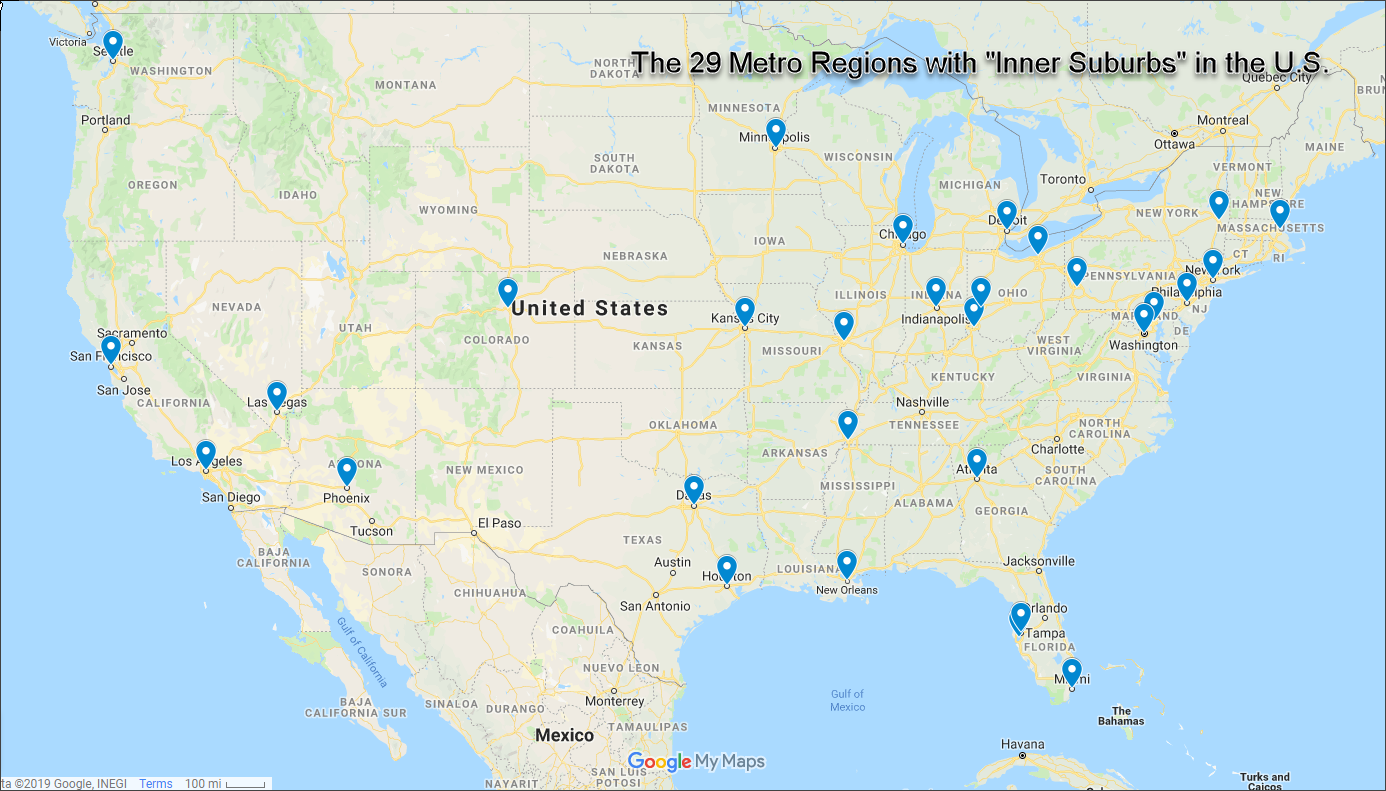
The first suburbs are aptly named because they were the first places settled when people began to leave major cities. Various factors drove the outward migration, but in many places, including Baltimore, a quest for housing was a primary cause. You see, the Great Depression began what was one of the most severe housing crises the nation has ever seen. By the end of World War II, people were doubled up with relatives, living in barns, and sleeping in their cars. Government intervention in the form of mortgage loan guarantees and the GI Bill, along with new mass-production techniques, soon led to the proliferation of new housing across the suburban landscape.
But in solving one problem, we created another, one which continues to plague us today. That's because the only thing guiding this development was traditional zoning, which separates uses and contributes to low walkability. Little thought was given to the protection of open space or green networks, with the result that 65% of residences inside the URDL lack access to adequate open space within a quarter mile of home. And the vast area of impervious surface that resulted has contributed to other challenges, especially low water quality in the Chesapeake Bay and its tributaries. And so, today, we find ourselves needing to "retrofit suburdlia" with the open space and green networks we failed to think about earlier.
Given our historically unique pattern of land development, I have long contended that looking to neighboring jurisdictions for ideas on how best to accomplish this retrofitting feat is a fool's errand. We should, instead, be looking to best practices that have evolved in other areas around the country with first suburbs like our own. A new book gives credence to this point of view, emphasizing the importance of publicly accessible, networked open space in solving open space challenges, citing Buckhead, Georgia, a first suburb of Atlanta, as a place where such a strategy has been successfully implemented.
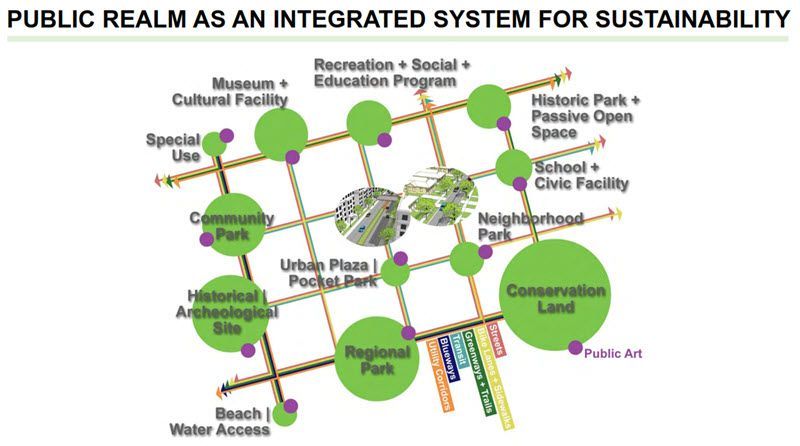
The book, Parks and Recreation system Planning: A New Approach for Creating Sustainable, Resilient Communities , argues for open space planning that is both more comprehensive, embracing transportation, stormwater, and utility systems (see diagram below), and more collaborative.
In a recent presentation sponsored by the Md. Department of Planning, its author, Dr. John Barth, discussed the Buckhead Greenspace Action Plan, and the creation of the Path 400 Trail, a bicycle trail that bisects Buckhead from North to South, linking and activating a a number of underutilized green spaces in the process. It's an attempt to ensure that every resident of this first suburb can walk to open space within a 10-minute walk of home, a goal of the Trust for Public Land that Barth fully embraces for inner suburbs like ours.
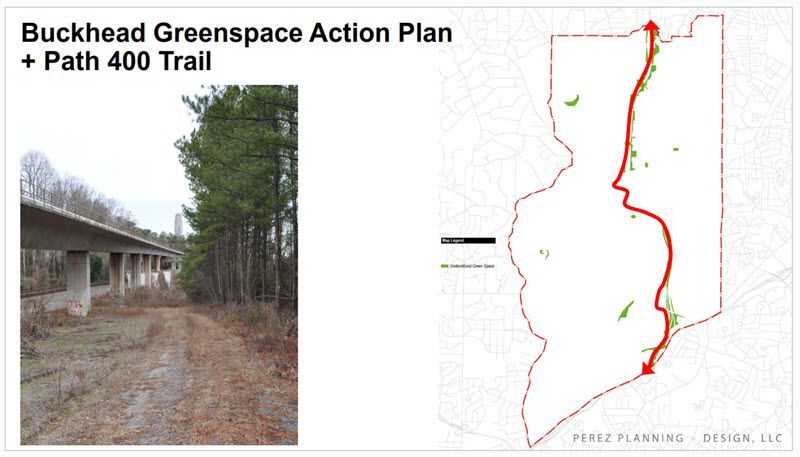
Thoughtful, collaborative planning and design has resulted in this:
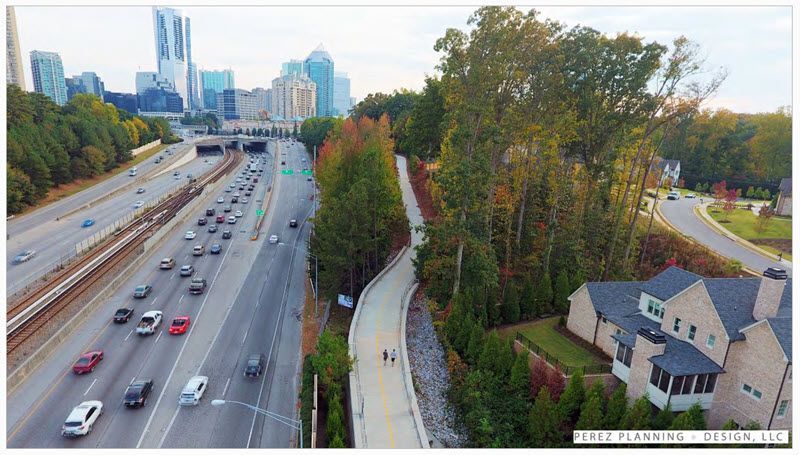
My point here is that there is much we can learn from Buckhead, Georgia, with whom we share many challenges: loss of market share to other jurisdictions, traffic congestion and poor pedestrian connectivity, poor water quality and flooding, limited public space, and high land costs ( Barth presentation, slide 46). And the time for study is upon us. The Planning Department is in the midst of developing Master Plan 2030 - sign up to be informed of opportunities for public input here. State law will require a new Land Preservation Parks and Recreation Plan to be developed by 2022, another opportunity for borrowing from places like Buckhead as we plan for more publicly accessible, networked open space here. It is a fitting time for reflecting on our fate as first suburbs. The future depends on our thoughtful, intentional action and collaboration.