
Stewardship Resources
Here are some handy guides to help your space!
General Maintenance
Management Zones & Manuals
Forest Stewardship
General Maintenance
Except for Watering, content for these items still needs to be written.
Proper Watering
When new plants are installed, the stewardship partner is responsible for ensuring they receive proper watering, including training neighborhood volunteers on effective watering techniques.
Watering Guidelines:
- Newly planted plants require more frequent watering until they are well established, which may take two or more growing seasons.
- Once established, gradually reducing watering frequency will help plants develop drought tolerance.
- Allow the soil to dry briefly between waterings to provide the plant roots with the oxygen they need.
- Water should be applied slowly to allow the soil to absorb it. Applying water too quickly can cause erosion, waste water, and compact the soil surface.
- Over-watering can be as damaging to plants as under-watering. Common signs of over-watering include yellowing and dropping of lower leaves, wilting or drooping, stunted growth, spotted foliage, and the presence of gray fuzzy mold on the stems, leaves, and flowers.
It’s important to observe the condition of newly planted plants, as no set watering schedule can replace regular monitoring.
Watering Schedule for New Plantings:
- Trees: For optimal results, use an open-ended hose placed at the base of the tree, allowing water to trickle slowly for 20-30 minutes every 4 days. Alternatively, drill 4-5 holes in the bottom of a 5-gallon plastic bucket, place it next to the tree, fill it with water, and let it drain slowly. Repeat this process four times per week for a total of 20 gallons. Move the bucket around the root zone to ensure even coverage.
- Shrubs, Perennials, and Groundcovers: Apply 1 gallon of water per square foot of root zone twice a week for the first month, then once a week thereafter. Use a gentle spray nozzle, ensuring the soil is moist to a depth of at least 4 inches.
Removing Invasives
Placeholder Text
Getting to Know Your Park: Bio Blitzing
Placeholder Text
Hosting a Community Event
Placeholder Text
Management Zones & Manuals
Overview of Zones
| Zone | Description | Park Locations |
|---|---|---|
| Turf | - | - |
| Stormwater BMP | Examples: bioretention pond, bioswale, rain garden | - |
| Conservation garden | Examples: Bayscape, pollinator meadow, shade garden | - |
| Individual tree | - | - |
| Community food garden | - | - |
| Hardscape | Examples: stone plaza, gravel path, concrete sidewalk, wooden bridge | - |
| Natural trail | Examples: mulched trail, dirt trail | - |
| Edible forest | - | - |
| Actively managed forest | - | - |
| Passive forest | - | - |
| Riparian | Examples: stream, pond, vernal pond, buffer | - |
| Amenities | Examples: playground, artwork, Little Free Library, bulletin board, stage, sign |
Turf Lawn Management Area
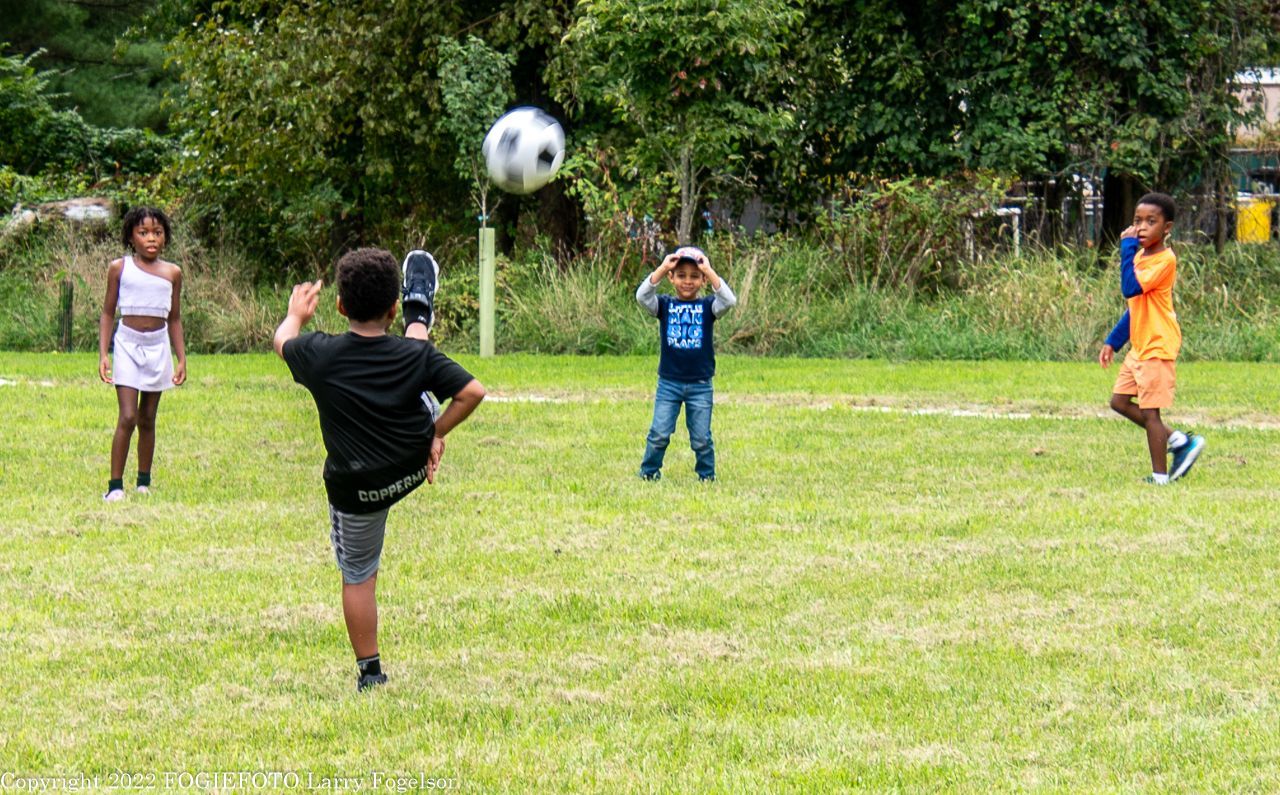
Lawn
- Mow at 2.5”-3.5” weekly, or as needed, during the growing season.
- Outline any individual trees with mulch, to identify the “mow” line
- Trim around individual trees, taking care not to damage tree trunks (using a string trimmer works well)
- Don’t use fertilizer or pesticides
Stormwater BMP
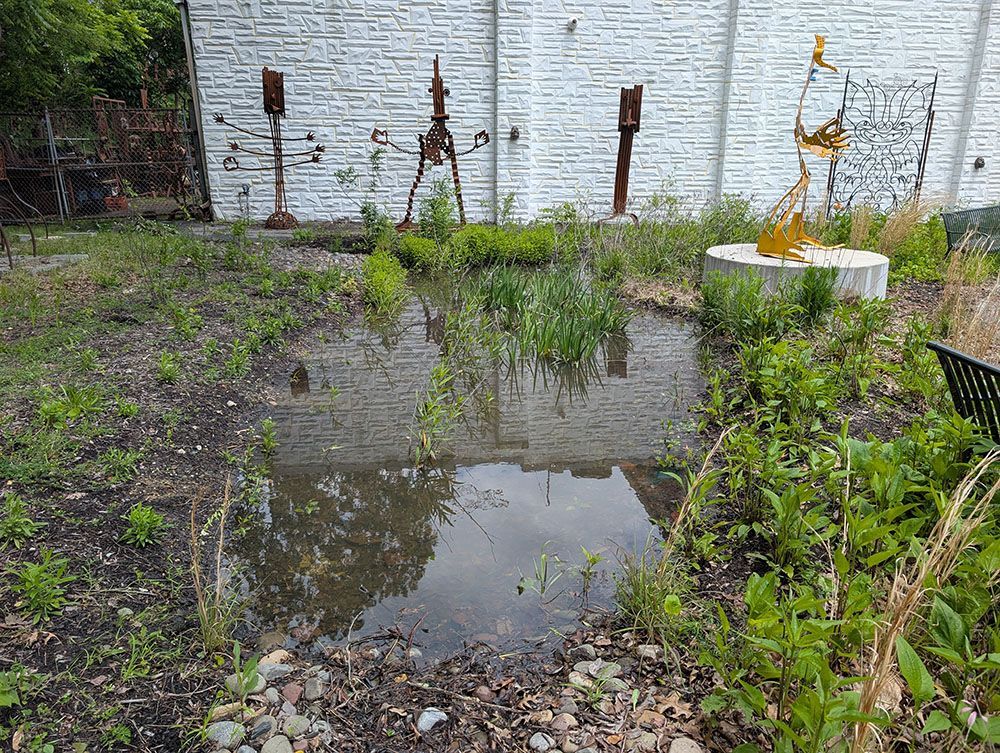
Stormwater BMP Management
Stormwater BMP’s (Best Management Practices) at NeighborSpace sites usually consist of one or two rain gardens that are designed to catch excess runoff from storm events, slowing and sinking the water before it can reach streams and rivers. The importance of these rain gardens cannot be overstated, as they prevent harmful pollutants from lawns, businesses, and commercial buildings from reaching our streams, while simultaneously reducing erosion, cooling rainwater, and recharging groundwater reserves. Additionally, plants selected for rain gardens benefit from consistently wet conditions, utilizing the excess water to grow, and magnifying the garden’s ability to sequester more rainwater.
Management of these rain gardens is fairly simple. NeighborSpace will usually offer one or two weeding events a year at our locations with rain gardens in order to help stewardship partners and neighbors to distinguish weeds from beneficial plants. Once you feel comfortable with identifying rain garden plants on your own, feel free to perform these weeding actions without NeighborSpace as needed.
Additionally, NeighborSpace needs to know if these rain gardens are functioning properly. Standing water should not be observed 72 hours after a rain event; most rain gardens will slow and sink water within 24 hours. Get in touch with us if your rain gardens do not sink water within this time period.
If the gardens do not receive enough water, the selected plants will not survive. If it seems as though the rain gardens are not capturing water for whatever reason, let us know and we will consult the site and identify the way forward.
Conservation Gardens
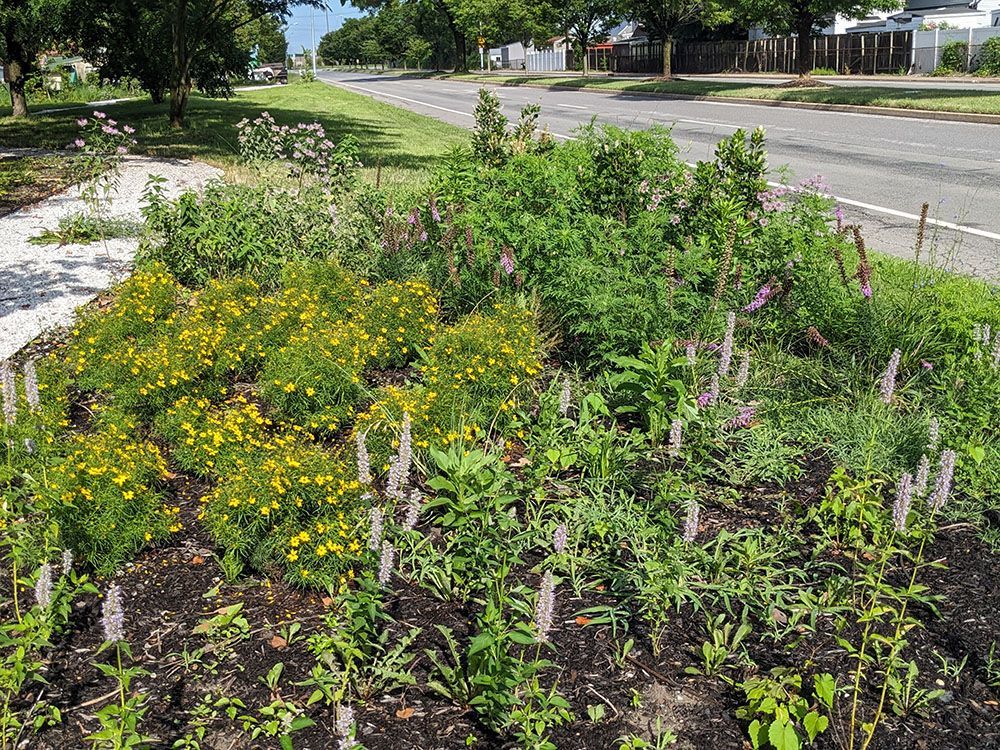
Conservation Gardens Management
Conservation gardens include a wide range of different “green” infrastructure, including bayscapes, pollinator gardens, and more. The maintenance for these zones all follows the same template, even if individual species may differ.
All conservation gardens require a weeding session once in the spring, and again in the fall. NeighborSpace will oftentimes organize and lead these events, in order to teach stewardship partners and neighbors the difference between weeds and beneficial plants. Once you become familiar with the beneficial plants in your conservation garden, feel free to organize events to weed as needed, with NeighborSpace’s approval.
New conservation gardens will require a regular watering regime in order to establish. The specifics of setting up a watering schedule are listed in the “Watering” tab. Watering should occur regularly from the beginning of spring to the end of fall for at least the first three years. After that point, the native perennials in the conservation gardens will have established themselves, and will only require some weeding from there on out except during drought events.
Individual Tree Management
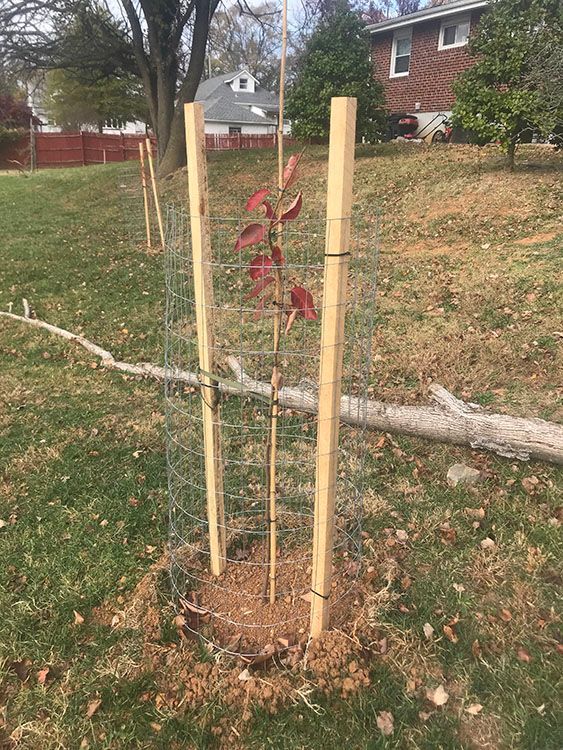
Individual Tree Management
Planting individual trees in turf lawn requires different maintenance than planting in a forest. Firstly, a regular watering regime should be implemented during the first two or three growing seasons (Spring-Fall each year) in order to help the new tree establish roots and thrive. See the “Watering” tab for instructions and suggestions. Trees can be planted as close or as far apart as desired, though keep mowing routes in mind when planting.
Mulching around the base of each new sapling at least once, but ideally twice a growing season is helpful for tree development and lawn mowing contractors alike. Mulch helps discourage weeds and retain moisture. Keep mulch away from the base of the plants to allow air to circulate and to avoid rot and other diseases. Spread a 2” layer of mulch around each tree, as far as the branches spread. Make sure to keep the mulch at least 5” away from the tree trunk to allow air to circulate and to prevent diseases: avoid creating mulch “volcanoes”.
Community Managed Food Gardens
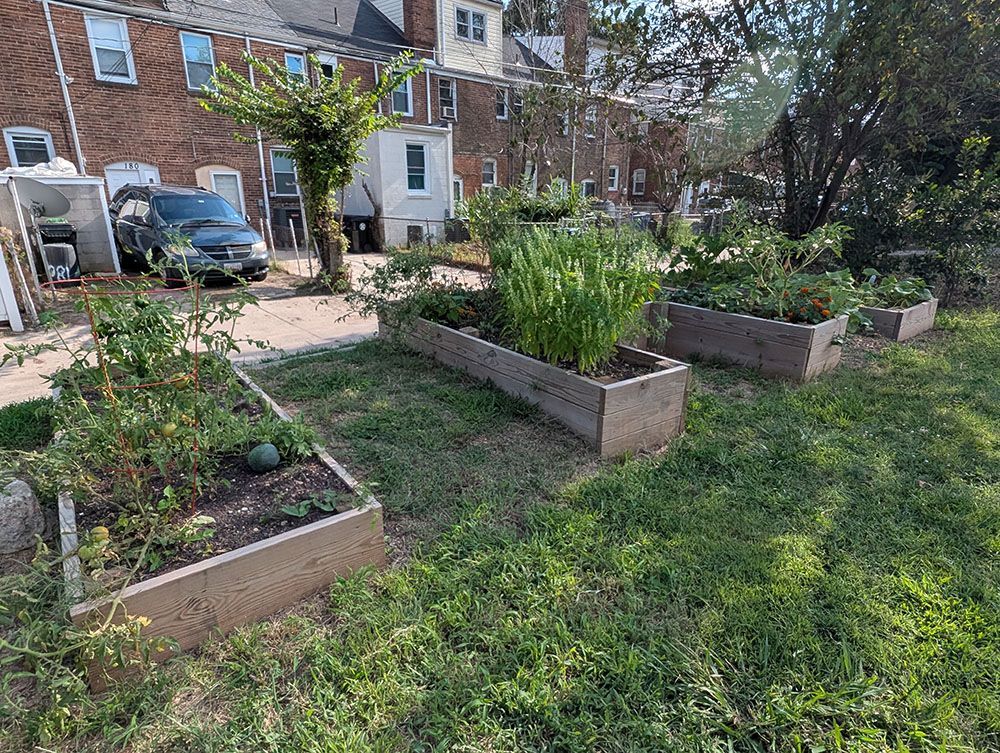
Community Managed Gardens
Community managed gardens differ from other NeighborSpace plantings as they generally focus on growing non-native fruits and vegetables for the community. Our native soil is too poor for these crops, and so NeighborSpace will work in coordination with a community to create raised beds for gardening.
The maintenance and upkeep of these gardens falls to the surrounding community, as does the selection and harvesting of crops. Follow the instructions on seed packets or tags for shade, watering, and soil pH for each plant.
At the end of a growing season, or at the beginning of a new season, the beds will need to be cleared, and any dead growth will need to be cut back and/or removed so that new plants can be grown. Be conscientious of your neighbors when growing fruits and vegetables- leave room for others, and clean up after yourself and your plants when done!
Hardscape
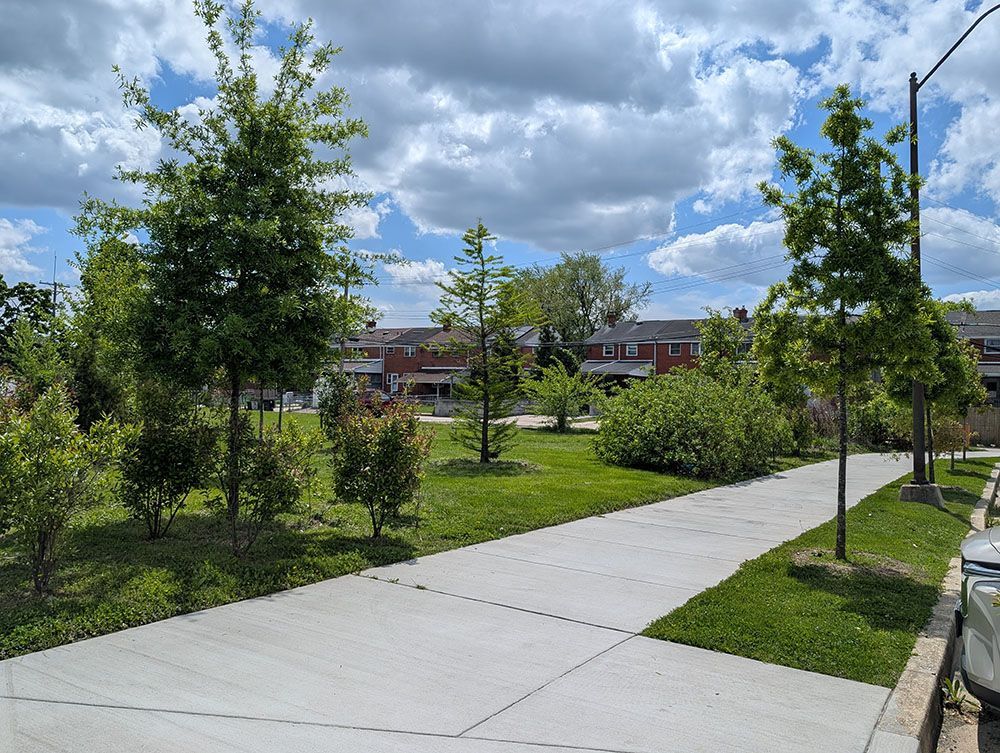
Hardscape Management
Many of NeighborSpace’s sites have some sort of hardscape improvement on the premises, whether it’s a sidewalk, gravel path, flagstone gathering circle, bridge, or playground. Monitoring and management of these areas is just as important as the “green” portions of the park. Sidewalks, gravel paths, and flagstones will need to be weeded occasionally as fescue and other grass pops up in the cracks, while structural integrity of bridges should be noted and reported on as issues come up. Playgrounds and other gathering areas should be inspected for trash and wear and tear.
As with signs and benches, hardscapes may require a sweeping or wipe down as necessary, usually no more than once a year. If anything becomes damaged, breaks, or seems to be at risk of breaking, get in touch with our Land Steward, Conor Harrington (conor@neighborspacebc.org).
Natural Trail
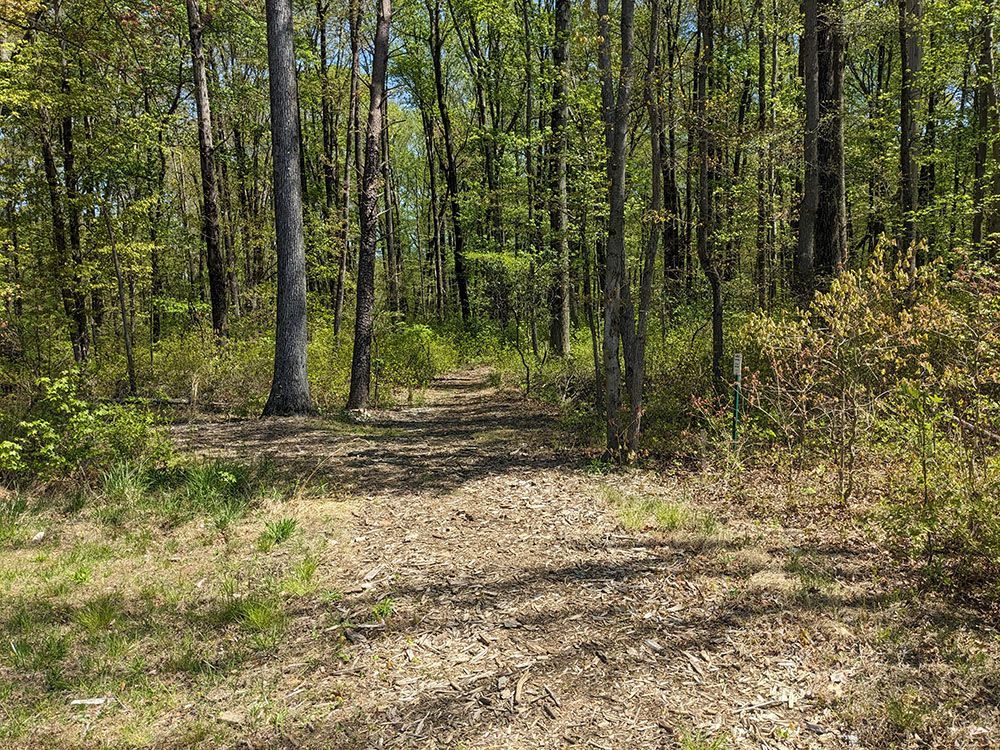
Natural Trail Management
Many of our NeighborSpace sites have some form of natural trail, usually constructed from mulch. These trails require annual maintenance and occasional check-ins to ensure they’re working properly and are not degrading.
NeighborSpace recommends mulching the trail once per year. Oftentimes, corporate work groups are willing and able to perform this sort of volunteer work. Wood chips can be acquired for free from Chip Drop (sign up
here). The amount of mulch they deliver can be variable, but generally speaking you will have more than enough to mulch your path. Excess mulch can be offered up to the surrounding community, or spread around the base of new tree and shrub plantings.
If you notice consistent erosion of wood chips and dirt from portions of your trail, let us know! Chances are, water from rain events flows over that spot at regular intervals, causing the trail to wash out. If this is the case, we can talk about green solutions (creation of dirt burms, renegotiating the flow of water, etc). Reach out to Conor Harrington (conor@neighborspacebc.org) with any further questions you may have!
Edible Forest
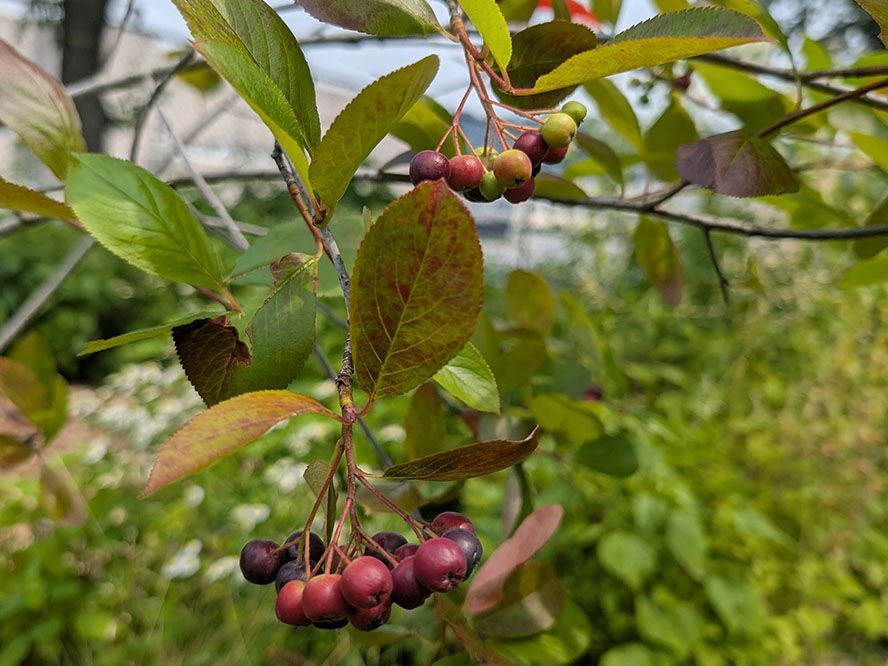
Placeholder for text
Actively Managed Forest
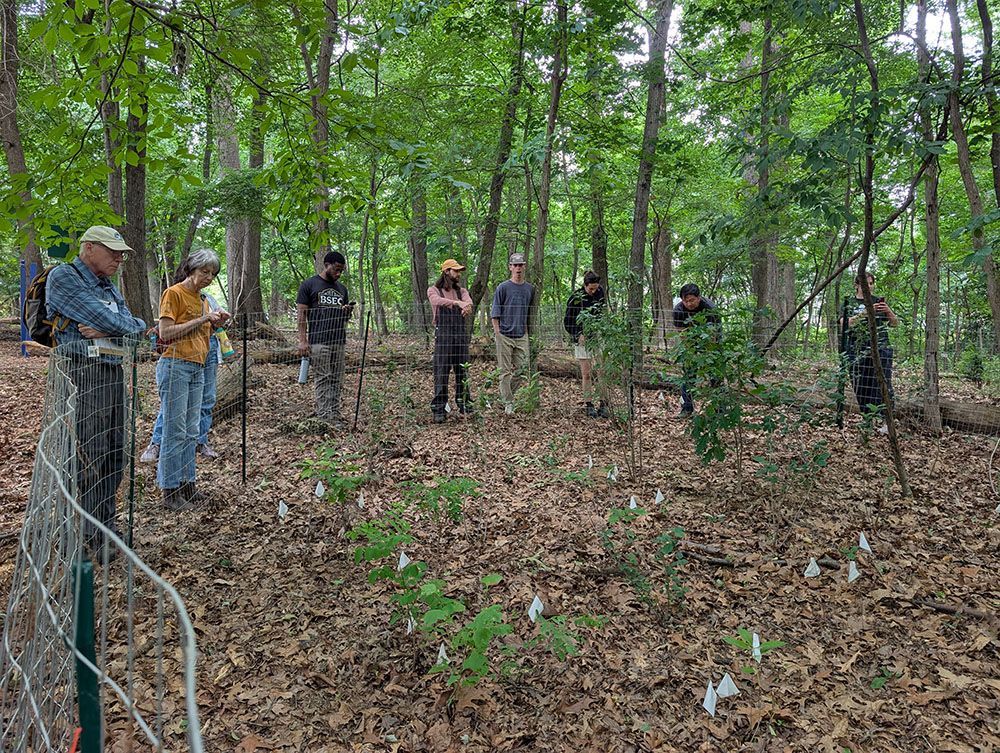
Actively Managed Forests
Actively managed forests comprise a growing part of NeighborSpace’s forested sites around Baltimore County. These areas differ from their passive counterparts in the level of restoration, conservation, and most importantly, the effort that goes into them.
Oftentimes, actively managed forests will have numerous activities and efforts underway at once. These include restoration activities of various kinds and forest health assessments to evaluate ecosystem viability. Restoration activities include:
- Invasive plant removal (vines, trees, shrubs, herbaceous plants)
- Tree/Shrub planting
- Seeding vacant areas (usually areas once occupied by invasives)
- Stream bank stabilization (done primarily through plantings/live staking)
NeighborSpace will usually organize events for all the above activities in coordination with the community and our stewardship partners. Therefore, it is the monitoring, management, and upkeep of these restoration activities that we need help with.
As a baseline, monitoring any restoration activity performed at an actively managed forest is helpful for us. Simply letting us know how new plantings are doing, where invasive species are popping up, and what types of invasive species are growing is helpful for our event planning.
In addition, these restoration projects will require a degree of watering, invasive removal, and observation of deer damage. Neighbors who have a good grasp of plant ID can aid NeighborSpace by removing invasive plants as they appear in and around new plantings. Watering is a bit trickier, as none of our forested sites have nearby spigots or other water hook-ups. Our current solution is to provide stewardship partners with a forest watering kit, which will include a hose, cart, and a container that can be wheeled through the forest and used to water plants as needed.
Passively Managed Forest
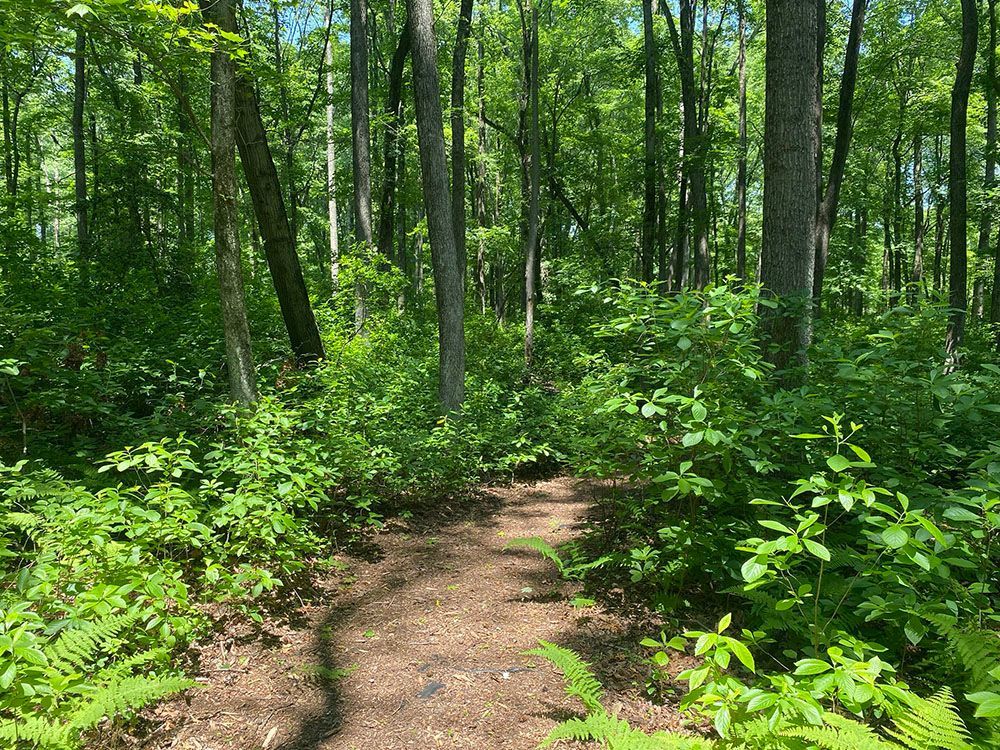
Passively Managed Forests
Passively managed forests differ from their active counterparts in that maintenance is far less demanding. As you might tell from the name, passively managed forests usually entail a more reactive approach and simple monitoring. This can be as simple as cataloging any observed changes in vegetation (think large fallen trees, a plant you haven’t seen before, significant vegetation dieback, unusual fungi growing on trees, etc). When walking through a site with passively managed forests, it helps to take a notebook and jot down anything you may notice. Feel free to get in contact with Conor Harrington at
conor@neighborspacebc.org with any questions and concerns you might have related to your passively managed forest.
Riparian Zone
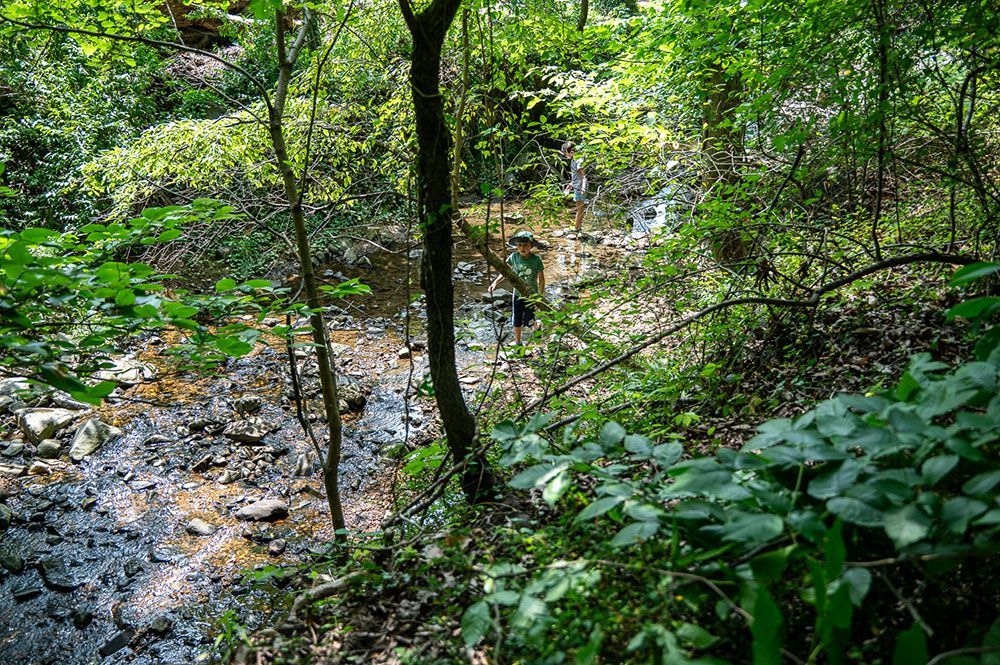
Placeholder for text
Signs and Benches Amenities
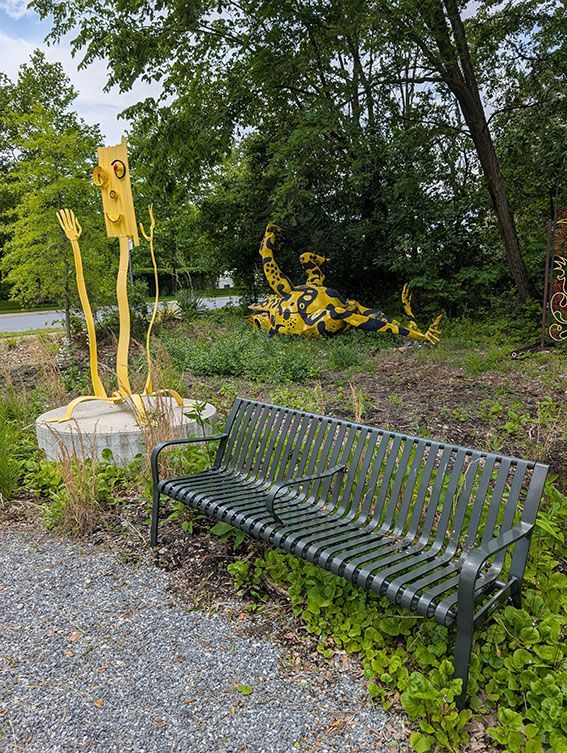
Sign and Bench Maintenance
NeighborSpace signs and benches require occasional wiping down and other maintenance. For metal signage and benches, wiping them down once a year should suffice, though they may require more attention as needed.
Wooden benches will also need to be wiped down once a year, in addition to monitoring for structural integrity. If you think that a wooden bench needs to be fixed or replaced, get in contact with our staff.
For all other maintenance concerns involving signage and benches (fresh paint, dealing with rust, etc), direct your questions to Conor Harrington at conor@neighborspacebc.org.
Forest Stewardship
Placeholder Text
Assessing Forest Health
Placeholder Text
Protecting Seedlings
Placeholder Text